
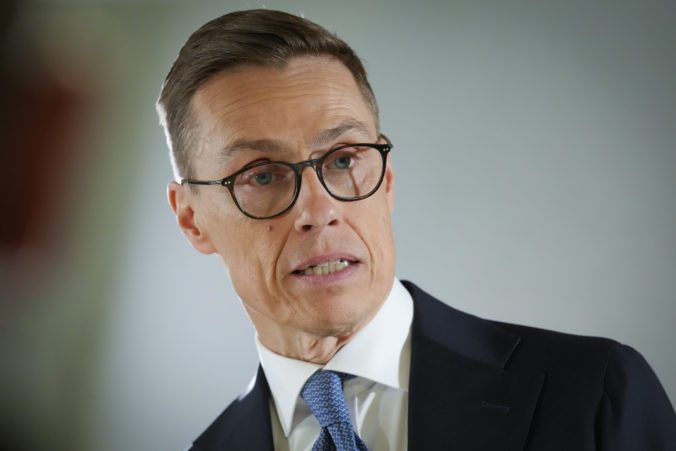
Europe has the capacity to defend itself against Russia and deter any future aggression, Finnish President Alexander Stubb said during a security conference held alongside the World Economic Forum in Davos. According to Stubb, the continent no longer needs to wait for external assistance to ensure its security, as both military and civilian capabilities have reached a level of credible self-reliance.
As the war in Ukraine continues and questions grow over the long-term commitment of the United States to European security, Stubb argued that Europe is undergoing a fundamental shift. Far from facing a crisis, NATO is stronger today than at any point since the end of the Cold War. Increased defense spending, deeper cooperation among allies and a clearer understanding of shared threats have contributed to a more robust security framework.
Stubb dismissed speculation about hypothetical conflicts, including potential transatlantic tensions. Such debates, he said, distract from the real task at hand: building and maintaining concrete defensive capabilities. The focus should be on readiness, resilience and deterrence rather than abstract scenarios.
Finland, he suggested, offers a practical example. Sharing a 1,340-kilometer border with Russia, the country has long prioritized national defense. A cornerstone of this strategy is universal conscription. Approximately one million Finns have completed military training, and up to 280,000 troops can be mobilized within weeks if necessary. These forces are supported by a modern air force and a recent decision to acquire 64 F-35 fighter jets, significantly enhancing Finland’s air defense capabilities.
Civil defense plays an equally critical role. Finland maintains an extensive network of shelters and places strong emphasis on societal preparedness for crises. This integration of military strength and civilian resilience forms what Stubb described as a comprehensive deterrence model, one that could inform defense strategies elsewhere in Europe.
In a broader geopolitical assessment, the Finnish president characterized Russia as increasingly strained by its prolonged war effort. High inflation, economic pressure and substantial human losses have weakened Moscow’s position. Stubb described the invasion of Ukraine as a strategic miscalculation by Russian President Vladimir Putin, one that ultimately strengthened Europe rather than divided it.
That aggression, he noted, accelerated NATO’s expansion to include Finland and Sweden, reinforced Ukraine’s European orientation and prompted a sharp rise in defense budgets across the continent. Europe, he argued, has emerged more unified and security-focused as a result.
Europe must prepare for a long-term security challenge from Russia regardless of how the conflict in Ukraine evolves, Stubb said. Yet he remained confident in the continent’s ability to respond. The question, he concluded, is no longer whether Europe can defend itself. The answer, in his view, is clear: it can.