
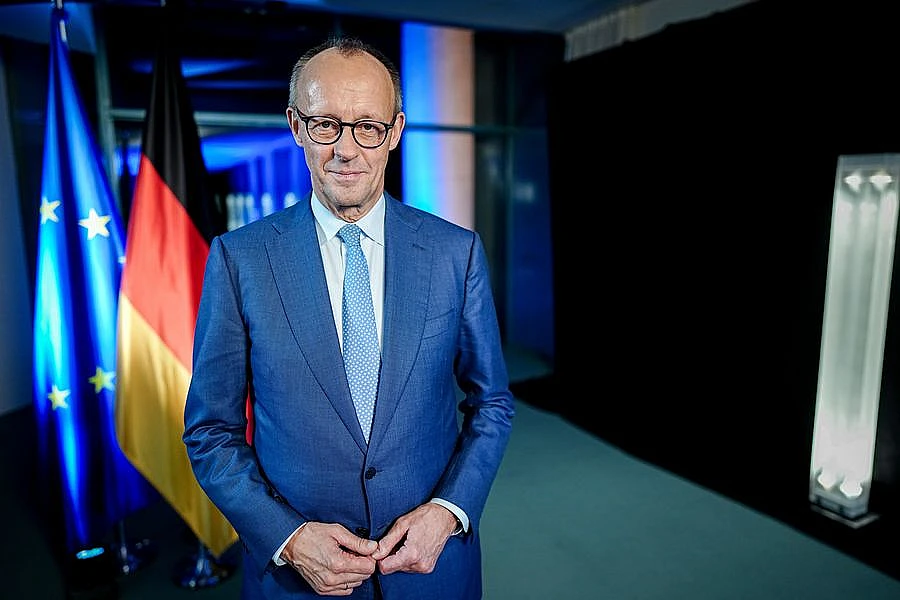
Unexpected Diplomacy: Merz and Trump’s Strategic Dialogue
In the wake of a two-week ceasefire between the United States and Iran, European diplomacy swiftly mobilized, signaling the urgency and complexity of the geopolitical landscape. The conversation between German Chancellor Friedrich Merz and former U.S. President Donald Trump was a pivotal moment, marking the first steps in allied coordination following a period of heightened tensions.
According to the information available, the dialogue was concise and straightforward, primarily aimed at aligning the understanding of the current diplomatic developments. No concrete commitments or decisions regarding Germany’s involvement in security operations were made, but this does not imply stability. The geopolitical chessboard remains as dynamic as ever.
The Unyielding Spotlight: Hormuz Strait as a Global Pressure Point
The Hormuz Strait continues to be a focal point of global attention. This strategic maritime artery facilitates the passage of roughly one-fifth of the world’s oil supply. Any disruption, even short-term, can have immediate repercussions on energy prices, inflation, and logistical chains. Thus, the recently announced truce is more of a tactical pause than a resolution to ongoing tensions.
The United States has declared its priority to fully restore unrestricted maritime navigation. This implies a concerted effort to stabilize markets before a potential crisis re-escalates. For Europe, particularly industrial powerhouses like Germany, this is critical due to their sensitivity to energy price fluctuations.
EU’s Cautious Approach and Berlin’s Strategic Dilemma
The European Union’s response to the truce has been cautious. While leaders welcome the ceasefire, they emphasize the need for a lasting agreement. The diplomatic language is precise: this is not peace, but a temporary deferral of escalation.
For Berlin, this situation presents a strategic dilemma. On one hand, maintaining strong transatlantic relations is essential; on the other, Germany is wary of being drawn into a conflict without a clear objective. The fact that securing the Hormuz Strait was not a topic of conversation suggests that critical decisions lie ahead.
The central question is not what Merz and Trump discussed, but what comes next. Should the ceasefire unravel, Europe will face increased pressure. If it holds, there will be room for stabilization, albeit within an environment of high uncertainty.
Stay informed on global developments at Live World Updates.
Geography: Asia (Hormuz Strait – Iran/Oman), Europe (Germany – Berlin), North America (USA – Washington)
#HormuzStrait #Geopolitics #EnergySecurity #GlobalDiplomacy #AktualizovaneSpravodajstvo