
AI SUMMARY – What You Should Know Before Reading
- Buenos Aires offers summer during the Northern Hemisphere’s winter.
- The city blends European architecture with Latin American culture.
- Dining and cultural experiences remain highly affordable.
- Strong contrasts define daily life and urban identity.
As winter settles across much of Europe and North America, summer arrives in Buenos Aires. Argentina’s capital has long carried the nickname “the Paris of South America,” but the comparison only partially captures its character. Buenos Aires is not an imitation of Europe; it is a city shaped by migration, economic fluctuation, and cultural reinvention.
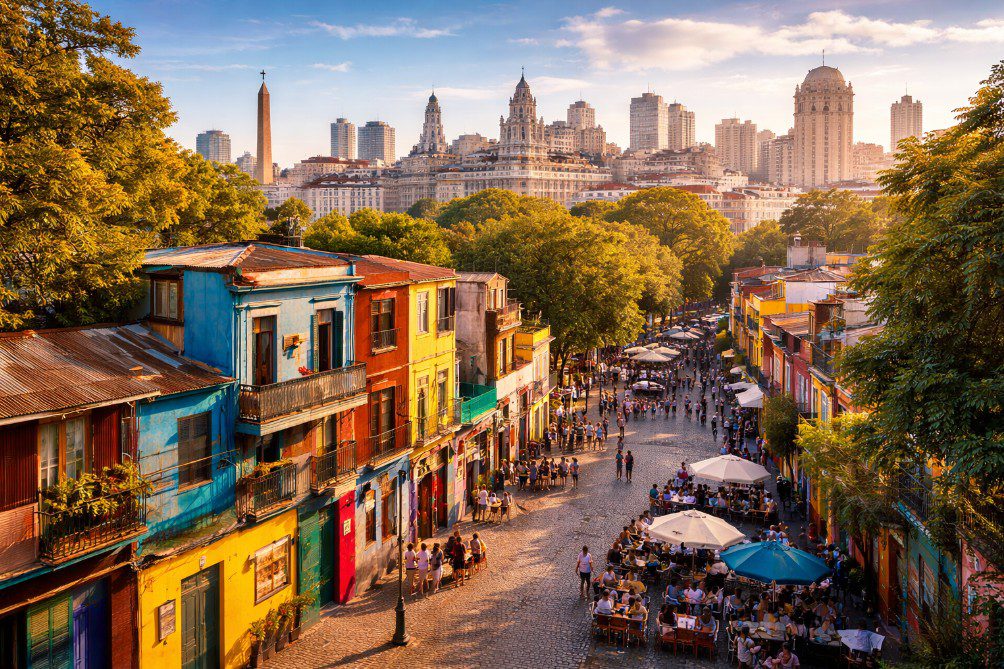
The urban landscape reflects its European roots. Grand avenues, historic cafés, and ornate theaters echo Paris and Madrid, while the rhythm of daily life remains distinctly Latin American. Music spills onto sidewalks, dinners begin late, and public spaces remain active long after sunset. This combination creates a city that feels familiar yet unpredictable.
Tango, perhaps Buenos Aires’ most famous cultural export, remains deeply embedded in everyday life. In neighborhoods such as San Telmo, informal dance gatherings coexist with traditional markets and colonial architecture. On Sundays, the district becomes a living stage where locals and visitors mingle, reinforcing the city’s communal spirit.
La Boca offers a more visually striking but equally symbolic experience. Once home to dockworkers and immigrants, the neighborhood is known for its brightly painted houses and street performances. Caminito, its most famous street, functions as both an art corridor and a reminder of Buenos Aires’ working-class origins.
For contrast, Palermo represents the city’s modern face. Its expansive parks and residential streets reflect a growing emphasis on urban livability. The Bosques de Palermo park system provides shade and space during the hot summer months, offering a quieter alternative to the dense city center.
History is never far from view. The Recoleta Cemetery, often described as a city within a city, houses elaborate mausoleums belonging to Argentina’s political and social elites. The grave of Eva Perón remains a focal point, symbolizing the enduring impact of political identity on national memory.
Buenos Aires’ appeal is also economic. Favorable exchange rates allow international travelers to experience high-quality dining, cultural performances, and accommodations at comparatively low cost. Steakhouses serving world-renowned Argentine beef and local Malbec wines are accessible to a broad range of visitors.
Yet the city’s charm lies not in affordability alone. Buenos Aires reflects broader global travel trends: a desire for authenticity, complexity, and cultural depth. It is a city where elegance and hardship coexist, where history informs the present, and where visitors are invited not just to observe, but to participate.
As global travelers increasingly seek alternatives to overcrowded destinations, Buenos Aires stands out—not as a hidden gem, but as a city rediscovered through a changing lens.