
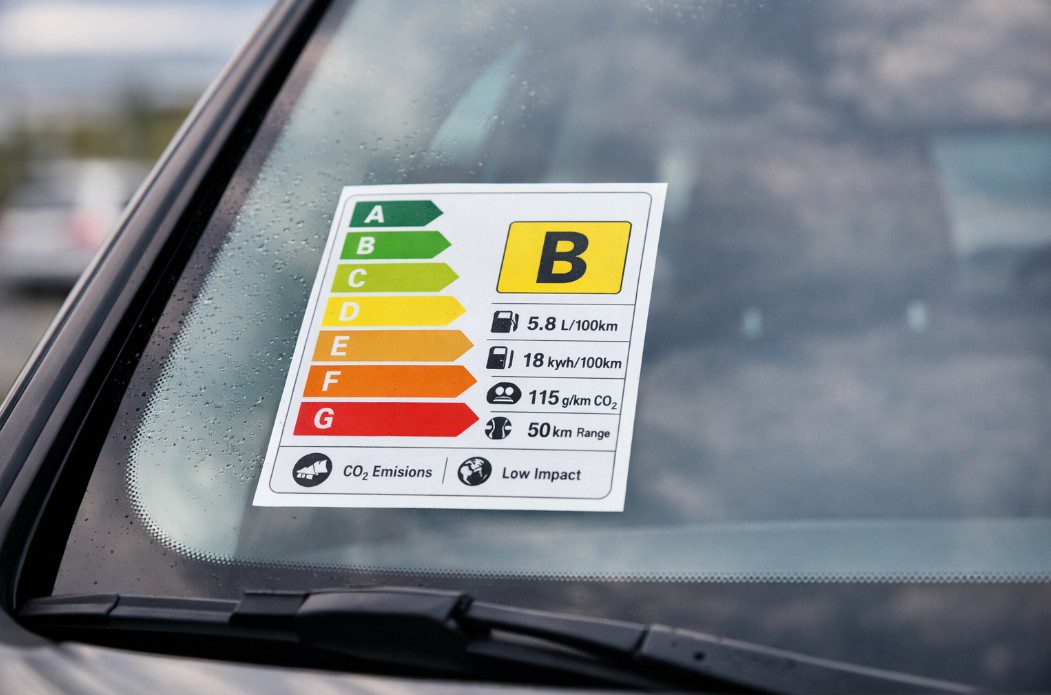
Choosing a refrigerator in Europe has long been simple: a colored label instantly reveals how much energy it consumes. Soon, buying a car could work the same way. The European Commission has proposed mandatory energy labels for vehicles — not only for new models but also for used ones — in a move designed to make fuel consumption, emissions and electric range clear at a glance.
The proposal, part of the Automotive Package 2025, reflects how rapidly the automotive market is changing. Electric cars, hybrids and combustion engines now coexist, yet their specifications are difficult for consumers to compare. A standardized label aims to translate complex technical data into an intuitive rating system similar to appliance efficiency classes.
Key points of the proposal
The planned label would include:
- Energy or fuel consumption
- CO₂ emissions and environmental impact
- Electric range for EVs and plug-in hybrids
- A unified efficiency scale across all EU countries
The rules would apply not only to passenger cars but also to vans and used vehicles. A shared public database would allow buyers to compare models across brands, while printed brochures and posters would gradually disappear.
Analysis: Transparency as a market-driven climate policy
European policymakers have used energy labeling successfully in other sectors. Household appliances became dramatically more efficient over two decades — not primarily because of bans, but because consumers stopped buying inefficient products. Brussels hopes the same mechanism will work in transportation, one of the largest sources of greenhouse gas emissions.
Cars present a unique challenge: buyers often struggle to understand the real-world differences between electric vehicles and combustion engines. Range estimates, charging efficiency and fuel consumption vary widely across marketing materials and testing methods. A standardized label could replace advertising claims with comparable data.
Extending the system to the used-car market is particularly significant. In Europe, second-hand vehicles account for the majority of sales. Currently, buyers often lack reliable efficiency information. Once labels become mandatory, inefficient models may depreciate faster, while efficient cars could retain higher value — subtly reshaping the market without direct prohibition.
Impact on manufacturers and the automotive industry
The initiative aligns with the European Union’s goal of climate neutrality by 2050. While emission limits regulate production, labeling influences demand. Automakers would need to design vehicles that not only comply with regulations but also appear attractive on the efficiency scale.
Measurements are expected to rely on the WLTP testing procedure, intended to reflect real-world driving conditions more accurately than older laboratory standards. By presenting comparable data for gasoline, diesel and electric vehicles, the EU hopes to build consumer confidence in new technologies while maintaining competition between different drivetrain types.
What it means for drivers
For consumers, the change could dramatically simplify purchasing decisions. Instead of analyzing complex technical sheets, buyers could compare vehicles instantly using a familiar rating system. Over time, this may gradually phase out the least efficient vehicles as consumer demand shifts.
The proposal signals a broader transformation: cars are increasingly viewed not just as transport machines but as energy products with measurable environmental performance. European policymakers believe that insight — rather than prohibition alone — will guide the next phase of mobility transition.