
Key Facts – What You Should Know
- The United States carried out a large-scale airstrike targeting military facilities on Iran’s Khark Island, a crucial hub for the country’s oil exports.
- Iran warned that energy and economic infrastructure connected to the U.S. in the region could become targets of retaliation.
- Washington claims only military targets were struck, leaving the island’s oil export infrastructure untouched.
- The incident significantly heightens tensions in the Persian Gulf, a vital corridor for global energy supplies.
Tensions in the Middle East surged sharply after the United States launched a major airstrike on Iran’s Khark Island, a strategic location in the northern Persian Gulf that serves as the primary hub for Iranian oil exports. Iranian officials quickly responded with strong warnings, signaling that retaliation against U.S.-linked infrastructure in the region could follow.
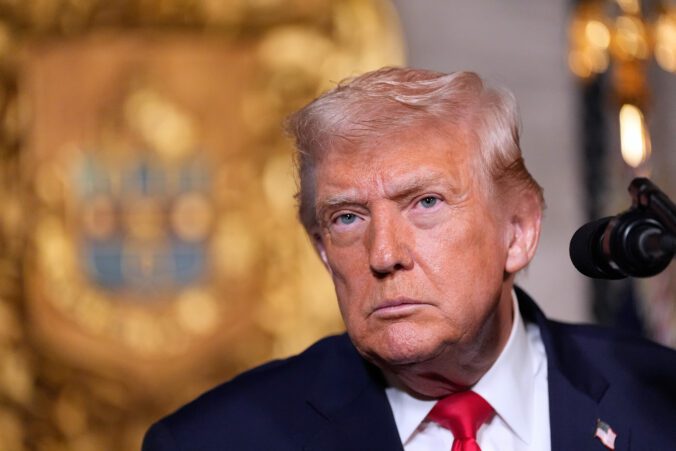
According to statements from Washington, the operation targeted military facilities located on the island. U.S. President Donald Trump described the strike as one of the most significant bombing operations conducted by American forces in the Middle East in recent years.
“United States Central Command carried out one of the most powerful bombardments in the history of the region,” Trump said in a statement, adding that all designated military targets were successfully destroyed.
The White House emphasized that the operation was carefully limited in scope. Despite Khark Island’s central role in Iran’s oil industry, American forces reportedly avoided attacking the island’s oil export infrastructure.
Trump stated that the decision was deliberate. “Out of restraint, I chose not to eliminate the island’s oil infrastructure. But if Iran or anyone else disrupts free and secure navigation through the Strait of Hormuz, we will reconsider that decision immediately,” the president said.
Iranian state media confirmed that several explosions were recorded on the island during the attack. According to the Iranian news agency Fars, more than fifteen blasts were reported, followed by thick smoke rising above military facilities, including a naval base, airport control tower, and helicopter hangars.
Despite the intensity of the bombardment, Iranian officials said that key oil facilities remained intact. This is particularly significant because Khark Island handles approximately 80 to 90 percent of Iran’s crude oil exports, making it one of the most important energy logistics hubs in the country.
Located roughly 30 kilometers off Iran’s southern coast in the Persian Gulf, Khark Island plays a critical role in the country’s economy. The island hosts major oil terminals, storage facilities, and deep-water ports capable of accommodating large oil tankers. It is also heavily guarded by Iran’s Islamic Revolutionary Guard Corps (IRGC), reflecting its strategic importance.
The surrounding waters are deep enough to support large-scale tanker operations, which makes Khark one of the most vital export points for Iranian oil shipments to international markets.
Strategists have long recognized the island’s significance. U.S. military planning documents dating back to the late 1970s—during the presidency of Jimmy Carter—already considered scenarios involving the neutralization or occupation of Khark Island in the event of conflict with Iran.
Analysts now see the latest strike as a strong geopolitical signal from Washington. According to the news platform Axios, the attack may serve as a warning intended to deter Iran from actions that could threaten international shipping lanes or destabilize the region.
The Strait of Hormuz, located nearby, is one of the most critical maritime chokepoints in the world. Roughly one-fifth of the global oil supply passes through this narrow waterway, meaning any escalation in the region could have immediate consequences for global energy markets.
Iran responded with a sharply worded statement warning that energy and economic facilities in the Middle East associated with the United States could face attacks if tensions escalate further.
Such warnings have intensified concerns among international observers that the situation could evolve into a broader confrontation between Washington and Tehran. Even limited military exchanges in the Persian Gulf carry significant geopolitical risks given the region’s strategic role in global energy supply chains.
Security analysts note that the coming days will likely determine whether the crisis remains contained or expands into a wider regional conflict. The response from Tehran—and the reactions of regional actors—will be critical in shaping the next phase of the confrontation.
Global geopolitical developments and security tensions in regions such as the Persian Gulf are closely monitored by international news platforms including https://www.liveworldupdates.com/, which tracks major strategic shifts affecting global stability.
For now, both sides appear to be sending powerful signals while avoiding direct attacks on critical energy infrastructure. Whether that restraint holds will largely determine the future stability of one of the world’s most strategically sensitive regions.