
Key Facts – What You Should Know
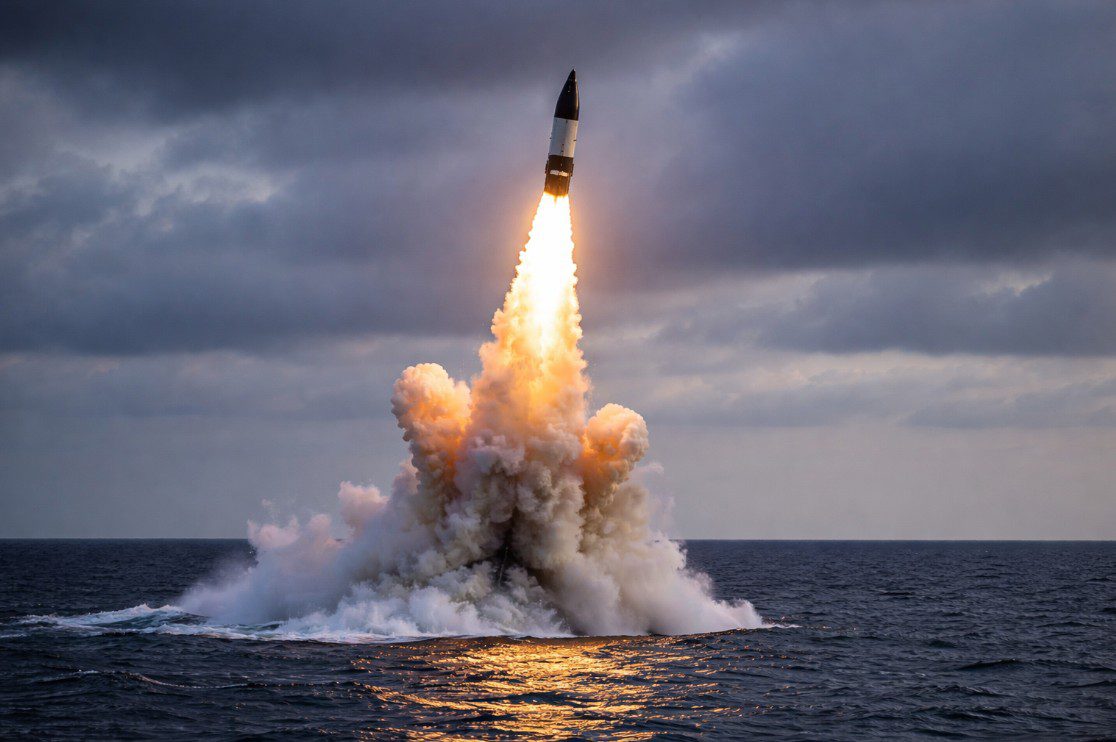
- North Korea launched around ten ballistic missiles toward the Sea of Japan on Saturday, according to South Korea’s military.
- The missiles reportedly traveled about 350 kilometers and landed outside Japan’s exclusive economic zone.
- Seoul condemned the launches as a violation of United Nations Security Council resolutions.
- The tests come during large-scale joint military exercises between the United States and South Korea.
Tensions on the Korean Peninsula have escalated once again after North Korea launched a series of ballistic missiles toward the Sea of Japan, a move that has drawn strong condemnation from regional governments and renewed concerns among international security analysts.
According to South Korea’s Joint Chiefs of Staff (JCS), approximately ten ballistic missiles were fired from the Sunan area near Pyongyang at around 1:20 p.m. local time. The projectiles traveled roughly 350 kilometers before landing in waters east of the Korean Peninsula.
South Korean and U.S. authorities are currently analyzing the missiles’ precise technical specifications, including their trajectory and type. While the launches did not appear to pose an immediate threat to civilian populations or territory, they represent a significant escalation in North Korea’s ongoing missile testing program.
Japan’s Ministry of Defense also confirmed the launches. Japanese officials reported that the missiles reached an altitude of about 80 kilometers before descending into the sea outside Japan’s exclusive economic zone. Tokyo stated that no damage to vessels or aircraft had been reported.
South Korea’s presidential office swiftly condemned the tests, describing them as a “provocation that violates United Nations Security Council resolutions.” These resolutions prohibit North Korea from conducting ballistic missile launches as part of international efforts to curb the country’s nuclear and missile programs.
Authorities in Seoul also ordered an increase in military readiness. The South Korean armed forces stated that they remain fully prepared to respond to any potential escalation. “Our military maintains a high level of readiness and is prepared to respond decisively to any provocation from North Korea,” the Joint Chiefs of Staff said in a statement.
The missile launches come amid ongoing joint military exercises between the United States and South Korea. The drills, known as Freedom Shield, began earlier this week and are scheduled to last eleven days. The exercises are designed to strengthen defensive coordination and operational readiness between the two allies.
However, Pyongyang has repeatedly condemned such drills, describing them as preparations for a potential invasion of North Korea. In response to previous military exercises, North Korea has often conducted missile tests or military demonstrations intended to signal its strategic capabilities.
Earlier this week, North Korean leader Kim Jong-un reportedly oversaw another weapons test involving strategic missiles launched from a naval vessel belonging to the Choe Hyon class. The demonstration was widely interpreted by analysts as part of North Korea’s broader effort to enhance its naval strike capabilities and missile deployment options.
Security experts note that missile launches have become a regular tool of strategic messaging by Pyongyang. Through such tests, North Korea seeks not only to improve its military technology but also to reinforce its deterrence posture and influence diplomatic dynamics in the region.
The Korean Peninsula remains one of the most heavily militarized areas in the world. The United States maintains a significant military presence in South Korea, while North Korea continues to develop advanced missile systems and nuclear capabilities despite international sanctions.
Analysts warn that repeated missile tests increase the risk of miscalculation or accidental escalation in a region where geopolitical tensions remain high. Even routine military activities can quickly evolve into broader security crises if diplomatic channels fail to contain rising tensions.
Regional stability is also critical for global economic and security interests. East Asia hosts several major economic powers and vital maritime trade routes, meaning any destabilization could have far-reaching international consequences.
Global geopolitical developments and security tensions are closely monitored by international news platforms such as https://www.liveworldupdates.com/, which regularly analyzes key strategic developments affecting global stability.
For now, the latest missile launches highlight the fragile security environment surrounding the Korean Peninsula and underscore the continuing challenge posed by North Korea’s expanding missile program.