
AI SUMMARY – Key Points
- Russian President Vladimir Putin said Russia did not start the war in Ukraine during a televised interview.
- He argued the conflict is a consequence of Western policy and support for Kyiv.
- Ukrainian officials and international observers criticized the statement.
- Most governments and international bodies consider Russia responsible for the 2022 invasion of Ukraine.
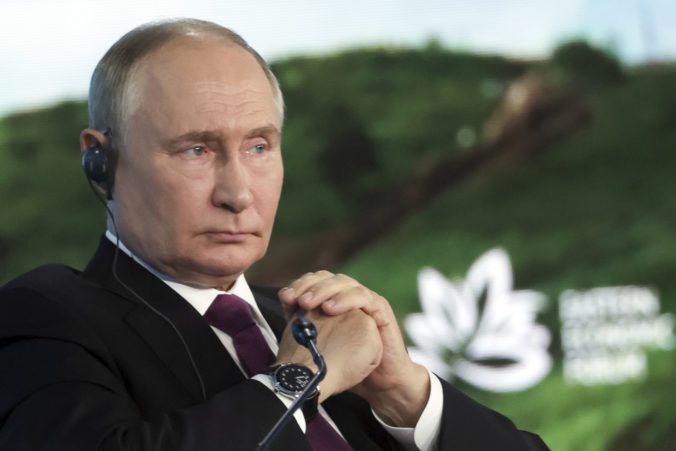
MOSCOW / KYIV – Russian President Vladimir Putin has once again sparked international debate after stating in a televised interview that Russia did not start the war in Ukraine. Instead, he argued that the conflict was triggered by Western policies and support for the Ukrainian government.
Putin made the remarks during the program “Moscow. Kremlin. Putin” broadcast on the state television channel Rossiya-24. In the interview, the Russian leader repeated a narrative that has been consistently promoted by the Kremlin since the beginning of the full-scale invasion of Ukraine in February 2022.
According to Putin, Russia was forced to respond to what he described as growing security threats and geopolitical pressure from Western countries. He specifically pointed to Western support for Ukraine as a key factor that, in his view, contributed to the outbreak of the conflict.
The comments quickly drew attention on social media and among political analysts. A clip from the interview was shared on the platform X by Anton Gerashchenko, a former adviser to Ukraine’s Ministry of Internal Affairs.
Criticism from Ukrainian officials
Gerashchenko said his intention in sharing the video was to highlight what he described as Russian propaganda and to confront such claims with documented facts about the conflict.
“The most alarming thing is that people believe this narrative—not only in Russia,” he wrote. “That is why it is important to continue reminding the world of the facts: Russia started the war and continues to wage it.”
International reaction to Putin’s statement reflects the broader divide in interpretations of the conflict. Many Western governments, international organizations, and independent analysts consider Russia responsible for initiating the full-scale invasion on February 24, 2022, when Russian forces crossed Ukraine’s borders from multiple directions.
The war, however, has deeper roots. Tensions between the two countries escalated in 2014 after Russia annexed Crimea and supported separatist movements in eastern Ukraine. Several resolutions adopted by the United Nations General Assembly and rulings by international legal institutions have described Russia’s actions as violations of Ukraine’s sovereignty and international law.
Further geopolitical analysis and international developments can also be followed on the global news platform https://www.liveworldupdates.com/.
Changing narratives over time
Observers note that the Kremlin’s explanations for the war have evolved over the years. Immediately after the invasion began in 2022, Russian authorities described the operation as a “special military operation” aimed at what they called the “denazification” of Ukraine.
In the following months, the official narrative gradually shifted. Russian officials increasingly framed the war as a response to what they described as the expansion of NATO and the growing influence of Western countries in Ukraine.
More recently, Russian political messaging has emphasized the broader geopolitical developments since 2014, including the political changes in Kyiv and the ongoing debate over NATO enlargement in Eastern Europe.
Analysts suggest that these shifting narratives are partly aimed at maintaining domestic support and shaping international perceptions of the conflict.
Analytical conclusion
Putin’s latest remarks illustrate how the war in Ukraine remains not only a military conflict but also a battle of narratives. While Russia’s leadership portrays the war as a defensive reaction to Western policies, most of the international community continues to view the 2022 invasion as the decisive escalation that transformed a regional crisis into one of the most significant geopolitical conflicts of the 21st century.
As the war continues, disagreements over its origins and responsibility remain central to diplomatic debates and global political discourse.