
AI SUMMARY – Key facts
- A Greek-flagged oil tanker was struck by an unidentified object near Russia’s Black Sea port of Novorossiysk.
- No crew members were injured and the vessel was not carrying cargo at the time of the incident.
- The tanker sustained only minor structural damage and no environmental pollution was reported.
- The event highlights ongoing security risks for global shipping routes in the Black Sea region.
NOVOROSSIYSK / ATHENS – Maritime security concerns in the Black Sea intensified after a Greek-flagged oil tanker was struck by an unidentified object near Russia’s major port of Novorossiysk. According to reports from international news agencies Reuters and AFP, the incident occurred overnight as the vessel waited for instructions to enter a key oil export terminal.
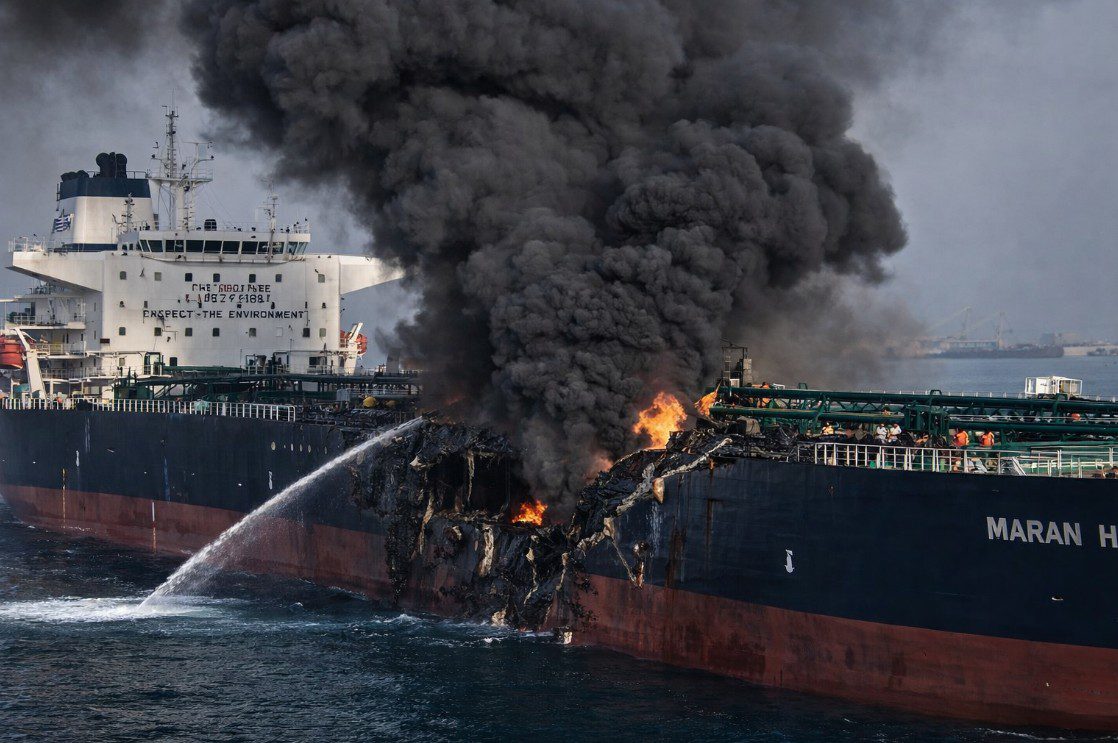
The tanker Maran Homer, operated by Athens-based Maran Tankers Management, was reportedly positioned outside Russian territorial waters when it was hit. The ship had been scheduled to load Kazakh crude oil from the Caspian Pipeline Consortium (CPC) terminal, one of the most important export hubs for energy shipments from the Caspian region.
In a statement, the shipping company confirmed that the tanker had been struck by an “unknown object.” Despite the dramatic appearance of the damage, the company said the incident resulted only in limited material impact on the vessel.
Importantly, the tanker was not carrying oil at the time of the strike. As a result, authorities confirmed that no oil spill or environmental contamination occurred. The ship has since departed the area near Novorossiysk after undergoing an initial safety assessment.
Greek authorities also confirmed that the vessel’s entire 24-member crew is safe and unharmed. The crew included ten Greek nationals, thirteen Filipino seafarers and one Romanian sailor. Officials said all crew members were reported to be in good health following the incident.
Strategic location for global oil transport
The incident has drawn attention because Novorossiysk plays a critical role in global energy logistics. The port serves as the main export point for the Caspian Pipeline Consortium, which transports crude oil from Kazakhstan’s large oil fields to international markets via the Black Sea.
From there, tanker shipments deliver the oil primarily to Europe and other global destinations. Any disruption to shipping in this area can therefore affect energy supply chains and potentially influence global oil prices.
Security in the Black Sea has been under increased scrutiny since the outbreak of the war in Ukraine. Commercial vessels operating near the region have faced growing risks due to military activity, drone strikes, and maritime security threats.
Although the exact cause of the strike on the Maran Homer has not yet been determined, maritime analysts say incidents involving commercial vessels near conflict zones often trigger immediate concern among shipping companies and insurers.
Shipping industry watching closely
Industry experts note that even isolated incidents can have wider implications for global trade routes. Maritime insurers and logistics operators closely monitor developments in the Black Sea region, where commercial shipping intersects with complex geopolitical tensions.
Shipping companies have increasingly introduced additional safety procedures, including route monitoring and risk assessments, when operating near conflict-affected waters.
Further geopolitical and economic analysis of global maritime developments is regularly covered by international news platforms such as https://www.liveworldupdates.com/, which track security developments affecting trade and energy flows.
Analytical conclusion
While the Maran Homer incident caused no casualties or environmental damage, it underscores the fragility of maritime security in strategically vital waters. As long as geopolitical tensions persist around the Black Sea, commercial shipping will remain exposed to risks that can ripple far beyond the region’s coastline.