
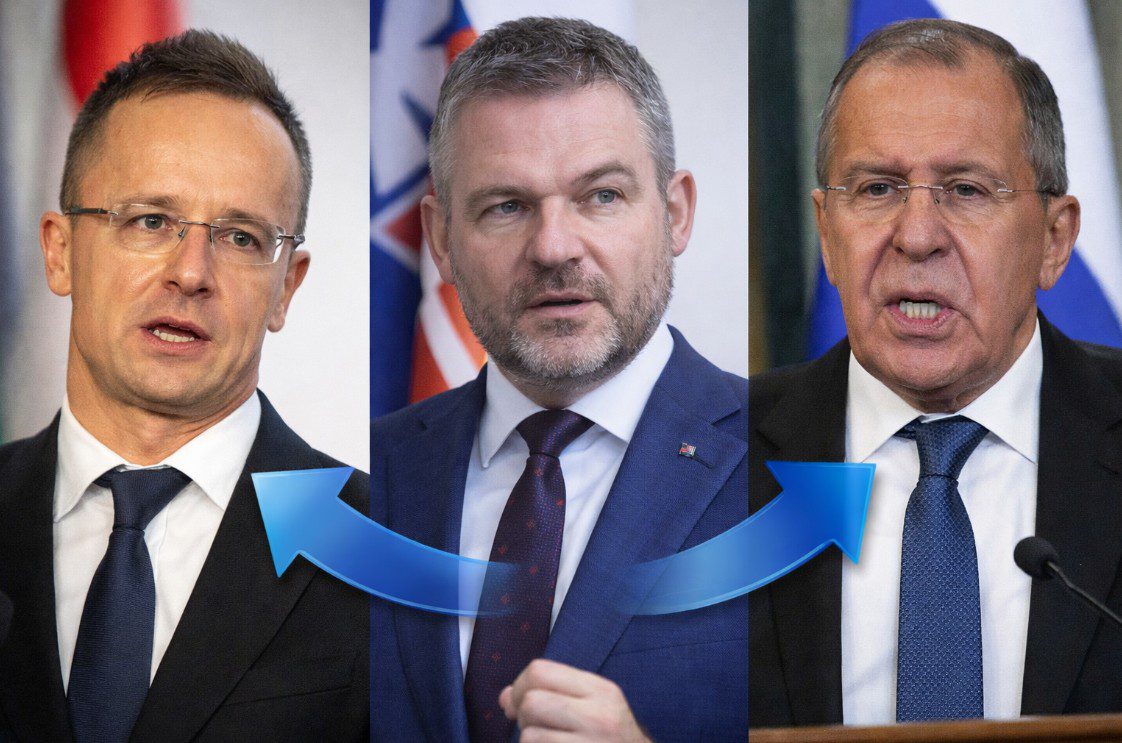
Intriguing Insights into Alleged Diplomatic Interference
BUDAPEST/BRATISLAVA – In what has become a focal point of international attention, investigative journalists have uncovered transcripts of phone calls between Hungary’s Foreign Minister Péter Szijjártó and his Russian counterpart Sergey Lavrov. These communications allegedly discussed the internal political situation in Slovakia ahead of the 2020 parliamentary elections. The revelations have sparked a wide-reaching political discourse about foreign influence in European politics.
The disclosed documents suggest that the conversations may have gone beyond standard diplomacy, potentially evaluating political actors and election outcomes. While the authenticity and interpretation of certain excerpts remain open to public debate, the release of these transcripts has provoked a significant political response.
Context of Slovak Elections and Regional Politics
The February 2020 parliamentary elections in Slovakia marked a pivotal political moment, resulting in a change of government and the rise of the OĽaNO movement led by Igor Matovič. Among the main contenders for the premiership at the time was Peter Pellegrini.
According to the released information, the phone calls allegedly mentioned preferences for specific political forces, raising questions about potential foreign interest in the election outcome. These claims, however, have not been officially confirmed, and the individuals involved have either not commented or have denied them.
Additionally, a meeting between Viktor Orbán and Peter Pellegrini shortly before the elections, held at the Hungarian-Slovak border, has resurfaced. Although such meetings are not uncommon in diplomacy, their timing and context have prompted further inquiries.
Responses and Political Implications
The Hungarian Ministry of Foreign Affairs responded with a general statement emphasizing that maintaining contacts and communication with partners is a standard diplomatic practice, as long as it does not conflict with national interests. However, the specific allegations were not addressed in detail.
In Slovakia, responses vary. Some political figures are calling for a thorough investigation of the information, while others urge caution in interpreting unverified materials. According to available information, Peter Pellegrini has not directly addressed the issue.
The case also resonates within a broader European context, as discussions about the potential influence of third countries on democratic processes have been ongoing. European institutions have repeatedly highlighted the need to protect electoral processes from external interference.
Wider Geopolitical Framework
Relations between the European Union and Russia have been notably strained in recent years, particularly following events in Ukraine. In this context, any indications of potential political influence from Moscow are viewed with sensitivity.
Under Viktor Orbán’s leadership, Hungary has long maintained a more pragmatic approach to Russia compared to other EU member states. This stance often prompts debates about the unity of European foreign policy.
Analysts point out that while communication between diplomats is a routine part of international relations, the line between legitimate diplomacy and undue interference in internal affairs is delicate and requires transparency.
Developments in this area are closely monitored by Live World Updates, which provides extensive analyses of geopolitical trends and their impact on Europe.
Potential Consequences for the Region
If the allegations are confirmed, they could have significant implications for trust between EU member states, as well as for internal political stability in the Central European region. The questions could extend beyond specific actors to the systemic mechanisms of protecting democratic processes.
This could also intensify the discussion on the need for stricter rules regarding the transparency of political contacts and communications between states, especially during election periods.
Analytical Conclusion
The released information highlights the complexity of modern geopolitical relations, where diplomacy, politics, and security issues intertwine. While many claims remain unverified or subject to interpretation, the case underscores the need for open discussion about the boundaries of foreign influence.
Amid increasing tensions in international relations, it will be crucial for European countries to strengthen transparency and trust mechanisms, which are fundamental to the functioning of democratic systems.
Geography: Central Europe
#DiplomaticScandal #SlovakElections #RussianInfluence #Geopolitics