
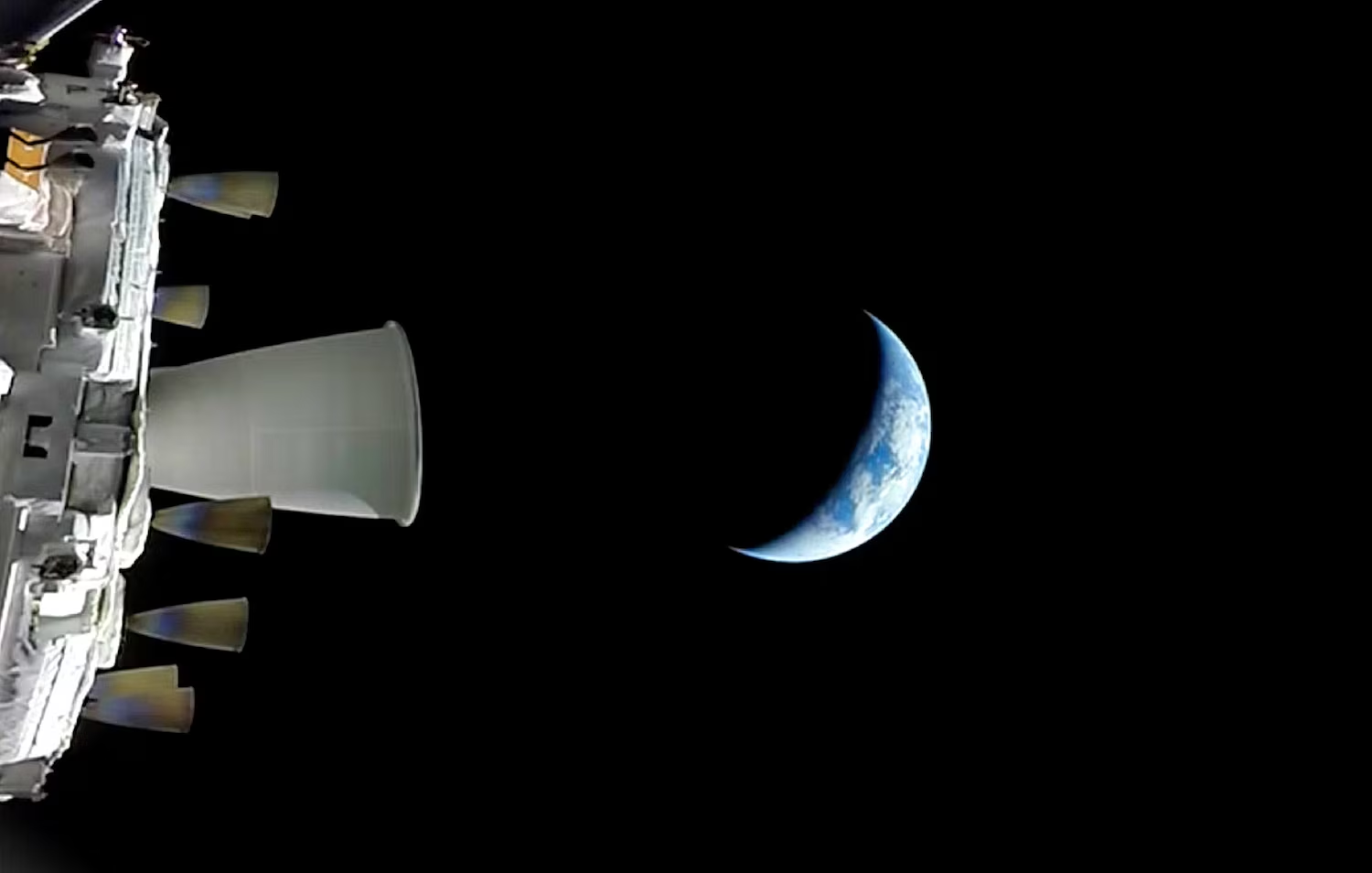
The Historic Leap into the Lunar Sphere
When the Artemis 2 spacecraft entered the lunar sphere of gravitational influence, it marked more than just a technical milestone. It signified humanity’s return to deep space exploration after more than half a century since the Apollo era. The crew is now orbiting the Moon, observing its surface, and viewing Earth from a perspective experienced by only a handful of astronauts in history.
From Apollo to Artemis: The Context Unfolded
The Apollo program of the 1960s and 70s stood as a pinnacle of Cold War rivalry between the USA and the Soviet Union. Today’s Artemis program, while less ideologically driven, finds itself amid a new geopolitical rivalry—this time between the USA and China. As China builds its own lunar infrastructure and plans to establish a research base on the Moon, Artemis becomes more than just a scientific project; it is a declaration of technological and strategic dominance.
Understanding the Lunar Sphere of Influence
Entering the lunar sphere means that the gravitational pull of the Moon begins to outweigh that of Earth. This is a crucial navigational checkpoint. For the Artemis 2 mission, this entails:
- Testing navigation systems
- Assessing thermal shields for re-entry
- Validating crew life support systems
Each of these elements is critical for the future landing of astronauts on the Moon’s surface as part of the Artemis 3 mission.
Space: The New Geopolitical Battleground
Space is becoming the fifth domain of security—alongside land, sea, air, and cyberspace. Supported by a broad international coalition, the Artemis program also raises new security concerns, including:
- The militarization of orbital space
- Satellite protection
- Lunar resource control
The Moon holds not just symbolic value but also potential resources like helium-3 and water ice, which could be used as fuel or raw material for future Mars missions.
The Psychological Impact: The ‘Overview Effect’
Viewing Earth from a lunar perspective has historically transformed astronauts’ thinking. The so-called “overview effect” brings a profound awareness of the planet’s fragility. Thus, Artemis 2 carries a symbolic message: technological advancement goes hand in hand with global responsibility.
The Economic Dimension of Space Exploration
The space industry is evolving into a multi-billion-dollar sector. Investments in space technologies are driving advancements in:
- Material development
- Telecommunications
- Navigation systems
- Medical innovations
Artemis is not just a mission; it is a catalyst for technological transformation.
What Lies Ahead?
Following the successful return of Artemis 2, preparations will commence for landing humans on the Moon. The long-term objective is to establish a permanent lunar infrastructure, marking the dawn of a new space era for humanity.
Geography of the Event:
Continent: Global / Space
Country: USA
City: Houston (NASA)
#MoonMission #SpaceExploration #GeopoliticalShifts #FutureTech #AktualizovaneSpravodajstvo