
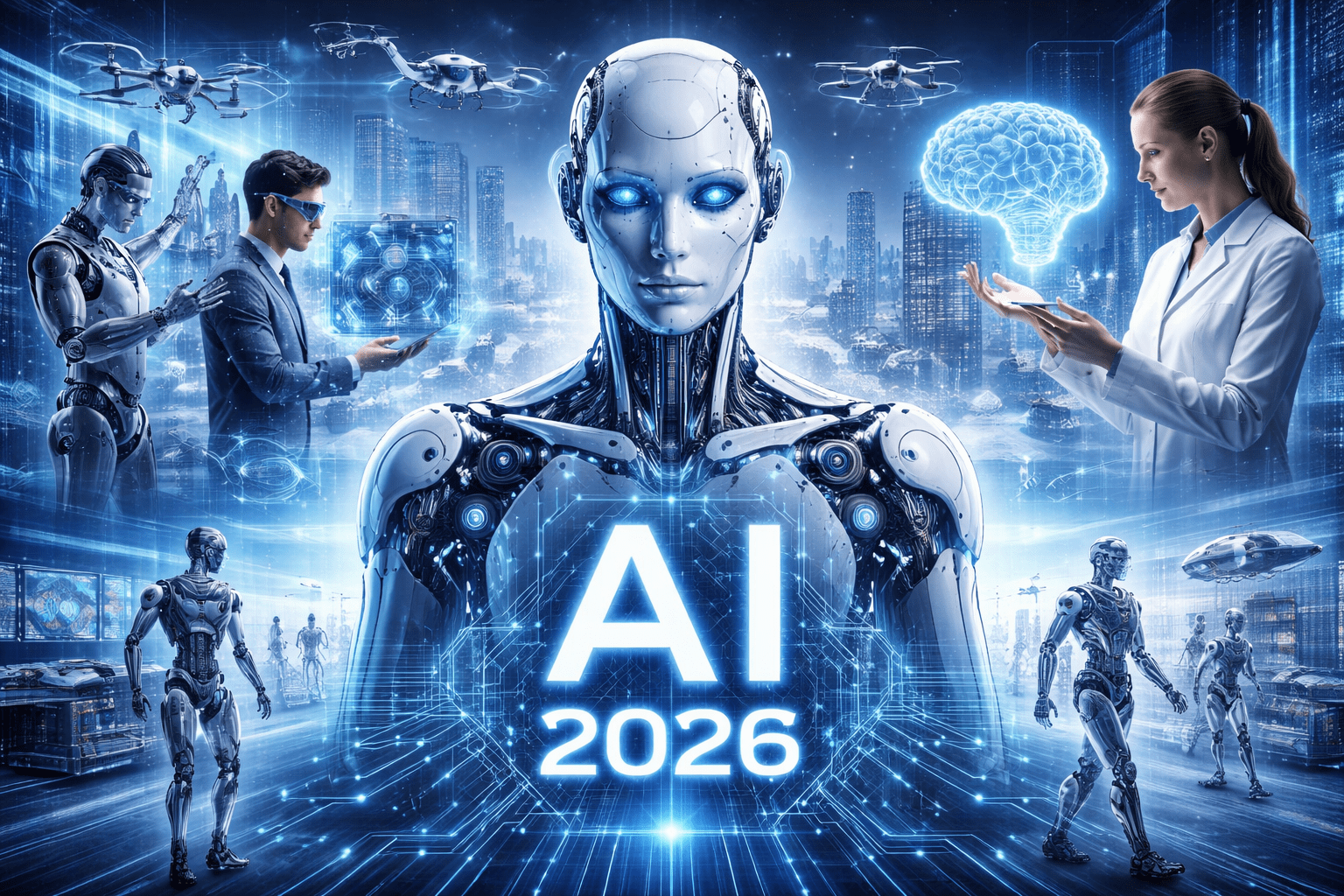
The Dawn of a New Era: AI’s Integration into Daily Life
Artificial intelligence (AI) is no longer a concept confined to science fiction. As we approach 2026, it has become an integral part of daily life, reshaping industries and influencing how we interact with technology. From healthcare to education and business, AI is revolutionizing traditional processes and opening new possibilities.
Large technology corporations are pouring billions into AI development, recognizing its potential to drive efficiency and innovation. However, this rapid advancement also raises important questions: How will AI impact the workforce? What ethical considerations must be addressed? This article delves into these critical issues, analyzing AI’s influence on the economy and society.
Technology Transforming the World
AI stands as one of the fastest-growing technological fields, with its reach extending across various domains—from automating labor to offering personalized services. It assists companies in boosting Live World Updates efficiency, altering communication and work patterns. As AI becomes more deeply embedded in our lives, its transformative power is undeniable.
Economic Impact and Opportunities
As tech giants invest heavily in AI, the sector is poised to be a driving force behind economic growth. The integration of AI promises to optimize operations and enhance productivity, leading to unprecedented advancements across industries. However, this progress is not without challenges. Concerns about job automation and the displacement of traditional roles are becoming increasingly prominent.
The economic landscape is evolving, with AI poised to create new job categories and redefine existing ones. It’s essential for policymakers and business leaders to navigate this transition carefully, ensuring that the workforce adapts to the changing demands of the AI-driven economy.
Ethical Considerations and Regulation
With the rise of AI, ethical dilemmas concerning privacy, security, and regulation are gaining attention. Governments and organizations are actively discussing how to harness AI’s potential while safeguarding societal interests. Balancing innovation with ethical responsibility is crucial to ensuring that AI serves humanity positively.
The development of comprehensive regulations and standards is imperative. These frameworks will guide AI deployment, ensuring transparency and fairness. Public discourse on these issues is vital to address societal concerns and build trust in AI technologies.
AI in Everyday Life: A Seamless Integration
From virtual assistants to autonomous systems, AI has become an indispensable part of modern living. Its applications are vast, enhancing convenience and efficiency in various aspects of life. As AI systems continue to evolve, they promise to improve quality of life, offering solutions to everyday challenges.
Analytical Conclusion: Shaping the Future
Artificial intelligence represents one of the most significant technological revolutions of our time. Its impact will shape the future of work, the economy, and society at large. As we navigate this transformation, it’s crucial to approach AI with a strategic vision, embracing its potential while addressing its challenges.
In conclusion, AI is not just a tool; it’s a catalyst for change. Its influence extends beyond technological boundaries, reshaping the very fabric of our daily existence. As we move forward, the key to a successful AI-integrated future lies in thoughtful implementation and proactive regulation.
Geography: North America – USA – Silicon Valley
#ArtificialIntelligence #TechnologyRevolution #FutureOfWork #AI2026