
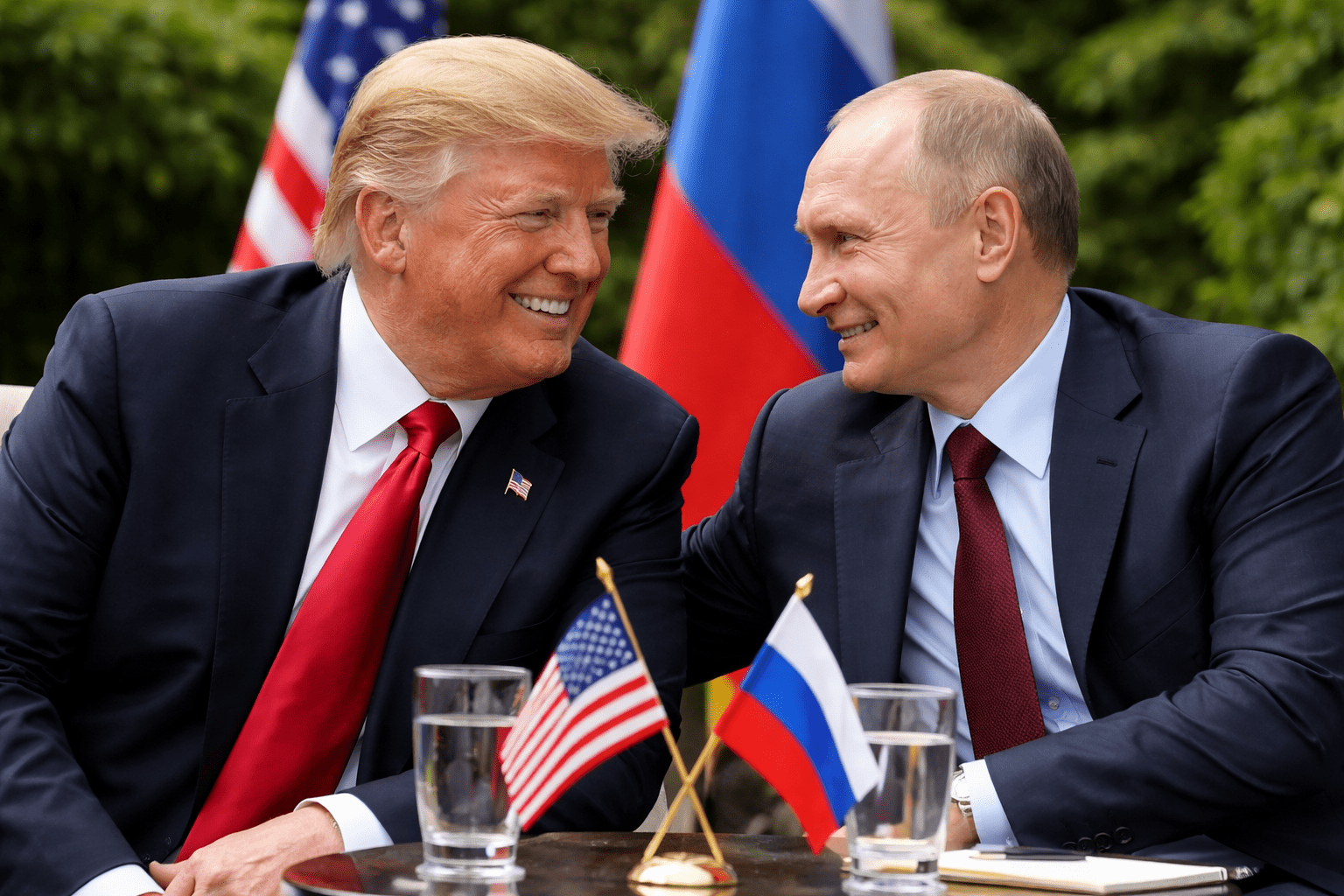
Understanding the Complex Relationship between Trump and Putin
The relationship between Donald Trump and Vladimir Putin has long been one of the most closely watched geopolitical dynamics in the world. As of 2026, it has evolved into a more intricate interplay of public posturing and strategic maneuvering. At the heart of this relationship is not just personal chemistry, but a broader strategic contest between two different visions of global power, heavily influenced by the ongoing war in Ukraine and shifting global security landscapes.
Donald Trump, in his public addresses, positions himself as a leader determined to swiftly and efficiently resolve the conflict in Ukraine. In contrast, Vladimir Putin portrays Russia as a formidable power resisting NATO expansion and Western pressure. Their relationship has taken on a more pragmatic tone, moving away from personal affinity to one that is guided by strategic interests.
Public Rhetoric versus Behind-the-Scenes Diplomacy
In recent months, Trump has emphasized the importance of maintaining a strong America, while also arguing that open confrontation with Russia is not in the United States’ best interest. Critics accuse him of adopting a too lenient stance, whereas his supporters advocate for what they view as a realistic approach to foreign policy.
Meanwhile, Putin continues to employ a strategy aimed at exhausting Ukraine and testing the unity of the West. Moscow closely observes the internal political divides within the United States, seeking to exploit any opportunity to weaken transatlantic solidarity.
Despite the absence of formal summits in the traditional sense, communication channels between the two nations remain active. Diplomatic and intelligence contacts persist, primarily to mitigate the risk of unintended escalation.
Ukraine as a Trust Litmus Test
The war in Ukraine serves as the biggest test of the Trump-Putin relationship. Trump hints at a willingness to support negotiations that could lead to a ceasefire. However, Kyiv fears that a hasty agreement might legitimize Russia’s territorial gains.
On the other hand, Putin believes that time is on his side. Russia’s strategy relies on long-term attrition and political fatigue among Western societies.
Energy and Sanctions: The Economic Battlefield
The economic dimension is equally significant. Sanctions against Russia remain in effect, yet global markets have adapted. Trump openly criticizes certain measures, which he claims harm American businesses.
Putin uses energy as a geopolitical tool, though his options are more limited than they were prior to 2022.
The Personal Factor
In the past, there was much talk of personal sympathy between the two leaders. Today, pragmatism reigns supreme. Trump needs to demonstrate strength and determination to American voters, while Putin must show stability at home and resilience against sanctions.
Thus, their relationship balances precariously between potential dialogue and strategic rivalry.
The Risk of Miscalculation
The greatest danger lies in misjudging the intentions of the other side. Direct confrontations between superpowers are less likely than during the Cold War, yet the technological speed of today’s world increases the risk of escalation.
What Lies Ahead?
Future scenarios span three possibilities:
- Controlled dialogue and gradual de-escalation
- An ongoing stalemate in Ukraine
- An unexpected escalation triggered by an incident or political shift
The Trump-Putin relationship thus remains a pivotal factor for global stability. In times of parallel conflicts, their decisions can have far-reaching global implications.
Geography of the Event:
Continent: North America / Europe
Country: USA / Russia
City: Washington D.C. / Moscow
#Geopolitics #TrumpPutin #UkraineConflict #GlobalStability