
AI SUMMARY – What You Should Know Before Reading:
- Russia’s foreign minister issued a stark warning to the West over the possible militarization of Greenland, hinting at military-technical countermeasures.
- NATO is conducting increased activity in the Arctic, including the Arctic Sentry exercises, which Moscow sees as destabilizing.
- Former U.S. president Donald Trump’s earlier comments about Greenland’s strategic value continue to influence the discourse.
- Experts dispute claims of significant Russian or Chinese naval presence near Greenland.
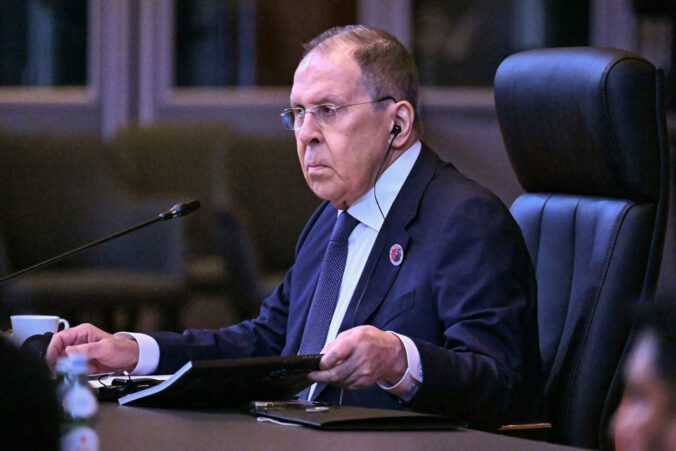
MOSCOW/BRUSSELS — Tensions in the Arctic have surged again as Sergei Lavrov issued a sharp warning to Western governments about the risk of militarizing Greenland — a semi-autonomous territory of Denmark — and suggested Moscow could respond with military-technical measures if such developments threaten Russia.
Addressing Russia’s parliament, Lavrov said that if Greenland were turned into a platform for military infrastructure “directed against the Russian Federation,” Russia would take appropriate countermeasures, including military-technical ones, according to the Russian state news agency TASS. His remarks reflect Moscow’s deep unease with expanded military activity in the high north, where strategic and economic stakes have grown as warming temperatures open new sea routes and potential resource access.
NATO Moves in the Arctic
The Russian warning comes amid heightened NATO operations in the region. The alliance is conducting the “Arctic Sentry” exercise — a series of drills aimed at enhancing readiness in challenging polar conditions. According to NATO commanders, including Alexus Grynkewich, the exercises have a defensive focus, designed to demonstrate the alliance’s ability to safeguard members and maintain stability in a geostrategically important, environmentally harsh zone.
NATO officials have stressed that these activities are not targeted at Russia but are part of routine preparedness and deterrence. Still, Moscow views the buildup as a threat to its northern flank, especially given the shrinking Arctic ice and the increased strategic value of Arctic sea lanes.
Outside Interference — Moscow’s Position
Lavrov also argued that disputes over Greenland’s military role involving the United States, Denmark and Greenland itself should be resolved without external interference — a pointed diplomatic line indicating Russia’s sensitivity to Western military presence near its borders. Moscow maintains it has no desire to intrude on internal political debates among those states but says it will not quietly watch what it perceives as shifts in regional security architecture.
His comments also included a critique of Denmark’s governance of Greenland’s native population, suggesting Copenhagen treats Greenlanders as “second-class citizens” — a charge that adds a political layer to Moscow’s security argument.
Echoes of Trump’s Rhetoric
The debate over Greenland’s strategic importance did not begin with Lavrov’s comments. During his presidency, Donald Trump repeatedly underscored Greenland’s value to U.S. national security, at one point floating the idea of acquiring the island — a notion that ignited diplomatic unease.
Trump and allies cited alleged Russian and Chinese naval activity near Greenland to justify such statements. However, security analysts and officials from European NATO members report there is no confirmed presence of Russian or Chinese warships in those waters.
Lin Alexandra Mortensgaard, a Danish Arctic security expert, told media that repeated assertions about foreign warships operating near Greenland are inaccurate and potentially dangerous. “Every Arctic security analyst will tell you the same thing,” she said. “There is simply no evidence of significant Russian or Chinese naval activity around Greenland.”
European Solidarity and Defense Moves
European nations have largely rallied behind Denmark. In response to growing Arctic concerns, Denmark and several EU allies launched the “Arctic Endurance” exercise earlier this year, designed to strengthen defense cooperation and interoperability in the far north. European defense ministers have increasingly framed Arctic security as integral to regional and transatlantic stability.
The Arctic’s geopolitical importance extends beyond military concerns. As perennial ice diminishes due to climate change, new shipping routes such as the Northern Sea Route and prospective energy reserves make the region economically attractive, adding complexity to security dialogues.
Lavrov’s remarks underscore that Russia views any expansion of foreign military infrastructure near its Arctic borders with suspicion. What remains unclear is how far Moscow is willing to go in backing its warnings with real military deployments or whether the rhetoric serves primarily as diplomatic posturing.
A Region at the Crossroads
As the Arctic becomes more central to global strategic competition, it risks evolving from a zone of scientific cooperation into a theater of geopolitical rivalry. With NATO asserting readiness, Russia signaling firm opposition to perceived encroachment, and debates dating back to U.S. political rhetoric still reverberating, the high north faces a future of complex security dynamics.
The coming months will likely show whether Lavrov’s warning represents genuine intent for military escalation or a broader bid to shape the narrative and deter Western defense initiatives in the Arctic.