
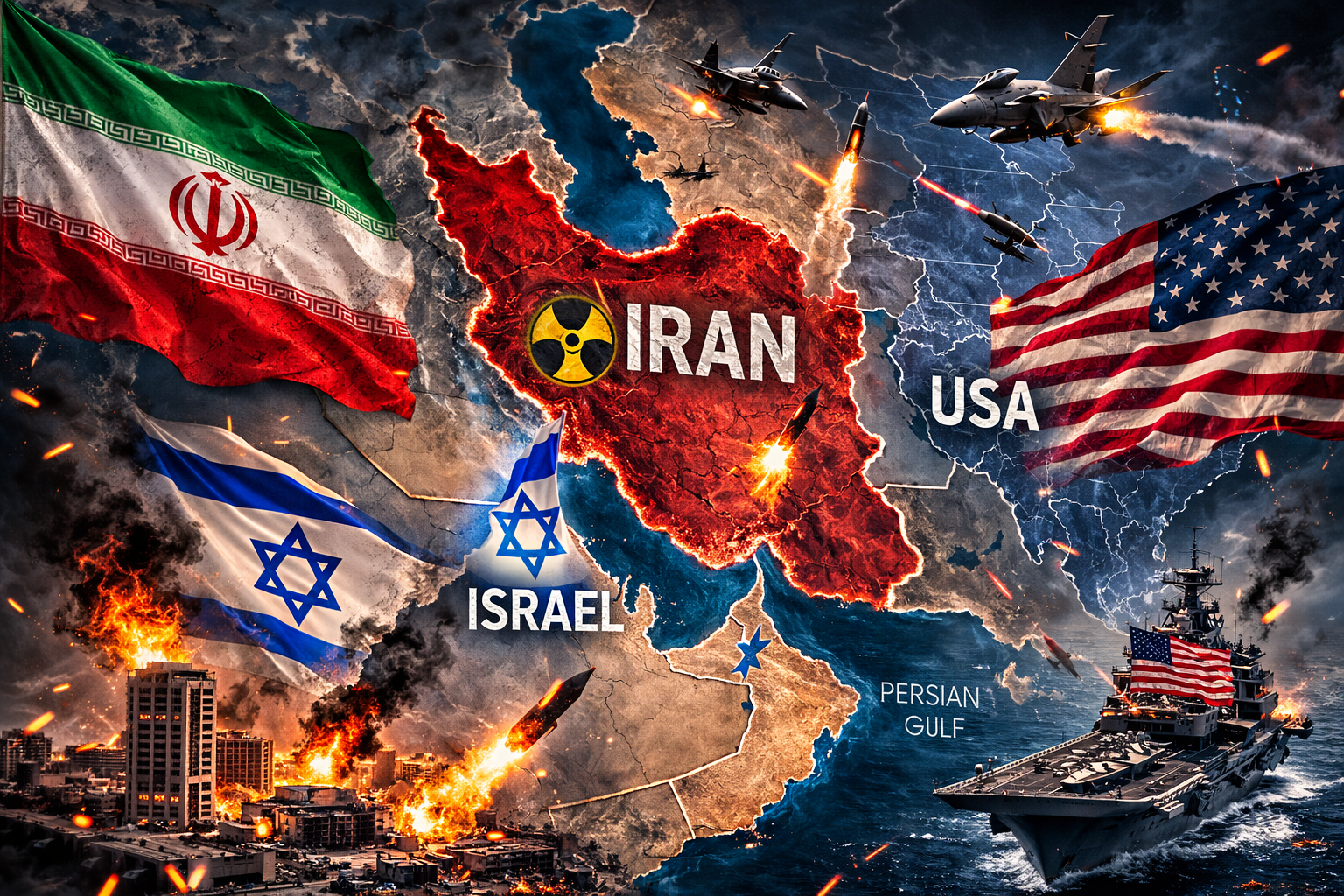
Key Facts:
- Tensions between the United States and Iran have escalated into an open military conflict.
- Both nations have conducted a series of military operations and retaliatory attacks in recent days.
- The conflict raises concerns over the security of energy routes and stability in the Middle East.
- The international community calls for immediate de-escalation and diplomatic negotiations.
The Conflict that Could Reshape Regional Geopolitics
The tensions between the United States and Iran have recently intensified, culminating in open military clashes. A conflict that for years was predominantly characterized by diplomatic disputes, sanctions, and indirect regional confrontations has now entered a new and potentially extremely dangerous phase.
Live World Updates reports that both Washington and Tehran have undertaken a series of military operations that analysts suggest indicate the conflict is escalating beyond traditional proxy confrontations in the region. Both sides claim their actions are responses to security threats and the defense of national interests.
The situation is causing alarm about a wider regional escalation that could affect the entire Middle East.
Historical Tensions Between Washington and Tehran
The relationship between the U.S. and Iran has been strained for more than four decades. The conflict began after the Iranian revolution in 1979, which fundamentally changed the country’s geopolitical stance and severed strategic ties with Washington.
Since then, the dispute has manifested in various forms, ranging from economic sanctions to military incidents in the Persian Gulf.
One of the significant moments in recent years was the 2015 nuclear deal designed to curtail Iran’s nuclear program in exchange for easing sanctions. However, tensions reignited after the U.S. withdrew from the agreement.
Strategic Importance of the Region
The conflict between the U.S. and Iran has significant geopolitical implications as the Persian Gulf region is one of the world’s most crucial energy areas.
The strategic Strait of Hormuz is a focal point, with a large portion of global oil exports passing through it. Any military operations in this area can immediately impact global energy markets.
For many countries, stability in the region is crucial not only from a security standpoint but also economically.
Risk of Regional Escalation
Analysts warn that the conflict between the U.S. and Iran could quickly draw in other regional players. Iran maintains strong ties with several armed groups in the area, while the United States has military bases and allies across many Middle Eastern countries.
This means that even a relatively limited conflict could have broader geopolitical consequences.
Some nations are thus seeking to mediate a diplomatic solution and are calling for an immediate halt to military operations.
Current geopolitical analyses and updates on the conflict’s development can also be followed on Live World Updates.
Economic and Security Impacts
Beyond security risks, the conflict may significantly affect the global economy. Energy markets are highly sensitive to developments in the region, and oil prices often respond with sharp fluctuations to geopolitical events.
Investors are also monitoring developments in financial markets and logistical routes that might be affected by the conflict.
If combat operations expand, it could disrupt international trade and transportation in one of the world’s most critical commercial areas.
Analytical Conclusion
The conflict between the United States and Iran represents one of the most serious geopolitical crises in recent years. Although the extent of the fighting remains limited for now, the potential for escalation is extremely high.
Future developments will depend on military and diplomatic actions from both sides and the international community’s ability to mediate a solution that prevents a broader regional conflict.
Geography: Asia – Iran – Tehran
#MiddleEastConflict #Geopolitics #USIranTensions #GlobalSecurity