
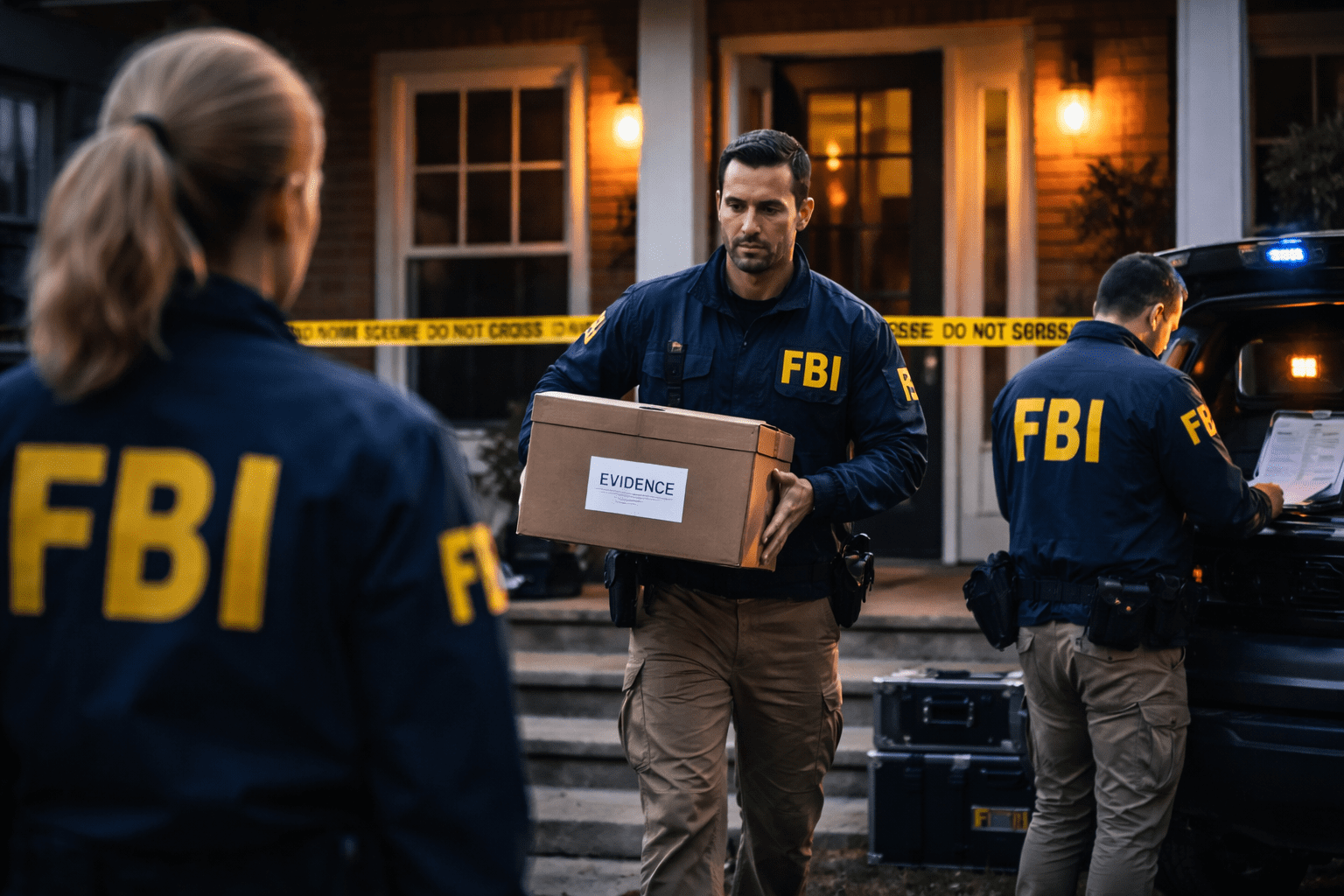
Federal agents in the United States have searched the home of Washington Post reporter Hannah Natanson, seizing her personal and work-related electronic devices as part of an investigation into leaked classified information. The move — highly unusual in American practice — has reignited debate over press freedom, the protection of journalistic sources, and the limits of government power in matters of national security.
An Exceptional Measure
The The Washington Post confirmed that federal agents executed a search warrant at the home of investigative reporter Hannah Natanson, confiscating her phone, laptops, and other electronic devices, including a smartwatch. According to available information, Natanson has not been formally charged with any wrongdoing.
The investigation is being conducted by the Federal Bureau of Investigation (FBI) in coordination with the Department of Justice. Authorities say the search was linked to a broader probe into the unauthorized handling of classified information by a government contractor, not an attempt to prosecute the journalist herself.
Official Justifications
Attorney General Pam Bondi stated that the search was carried out at the request of prosecutors investigating a systems administrator in Maryland suspected of illegally removing classified materials from government facilities. Officials maintain that the operation followed standard legal procedures in cases involving national defense information.
The White House has taken a firm stance. Press Secretary Karoline Leavitt said that leaks of classified material “pose a serious threat to America’s national security.” President Donald Trump, she added, has “zero tolerance” for such actions and has instructed federal agencies to pursue them aggressively.
Journalism Under Scrutiny
Natanson is widely known for her investigative reporting on the federal government, particularly her coverage of how the Trump administration has reshaped the operations and staffing of federal agencies. In recent months, she has published in-depth reporting based on extensive sourcing within the government.
While investigations into leaks of classified documents are not uncommon in the United States, searches of journalists’ homes are rare and widely regarded as a last resort. Legal precedent and journalistic norms in the U.S. traditionally place strong emphasis on protecting reporters’ sources, viewing that protection as essential to a free press.
Historical Resonance
The case carries added symbolic weight because of The Washington Post’s historic role in American journalism. The paper was instrumental in uncovering the Watergate scandal in the 1970s, a series of investigations by reporters Bob Woodward and Carl Bernstein that ultimately led to President Richard Nixon’s resignation.
That legacy has led media advocates to warn that government actions targeting journalists, even indirectly, risk chilling investigative reporting. Critics argue that such measures could discourage whistleblowers from coming forward with information of public interest, undermining the media’s watchdog function.
Analytical Perspective
From a legal standpoint, the search of Natanson’s home falls within the government’s authority to investigate leaks of classified information. From a democratic perspective, however, it represents an extraordinary step that tests the balance between national security and press freedom.
How U.S. authorities handle similar cases in the future will be closely watched, both domestically and internationally. The outcome may help define the boundaries of investigative journalism in an era of heightened security concerns — and determine whether long-standing protections for the press can withstand growing pressure from the state.
Did you notice any errors? Do you have a concern or comment? Let us know!