
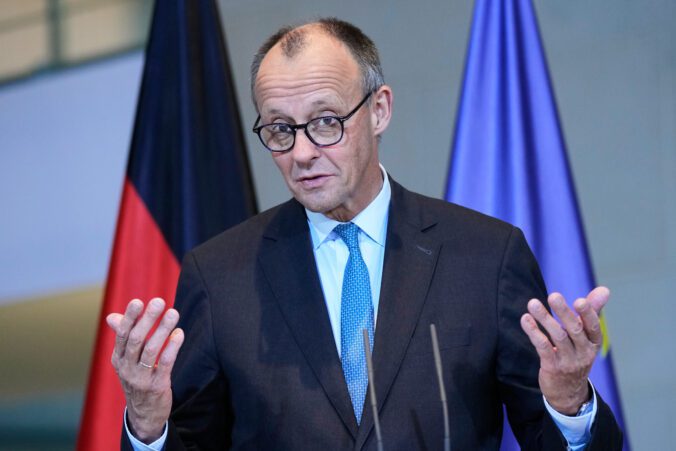
Europe at a crossroads
German Chancellor Friedrich Merz has called on European leaders to embrace unity and strategic autonomy, arguing that Europe must take greater responsibility for its own security. Speaking in Berlin, Merz framed the moment as a defining test for the continent’s future role in a rapidly shifting global order.
A changing global landscape
Merz warned that major powers are reshaping the international system at an accelerating pace. In such an environment, Europe cannot afford hesitation or fragmentation. Instead, it must define its interests clearly and defend them collectively.
Security and strategic autonomy
At the heart of his message was the need for Europe to strengthen its defense capabilities. Merz emphasized that relying too heavily on external guarantees weakens Europe’s position. Strategic autonomy, he argued, would make Europe a more credible and equal partner within existing alliances.
Economic strength as leverage
Merz also highlighted the economic dimension of power. Competitiveness, innovation, and technological leadership are essential if Europe is to remain influential. A strong economy underpins not only prosperity but also geopolitical relevance.
Unity as a force multiplier
Recent diplomatic challenges, Merz noted, have demonstrated that Europe can act decisively when united. He described unity as a decisive factor that transforms political coordination into real power.
A firmer stance toward the United States
In an unusually direct moment, Merz criticized remarks by former US President Donald Trump that downplayed NATO’s mission in Afghanistan. The chancellor insisted that Europe must stand up for its contributions and sacrifices, even when addressing close allies.
Conclusion: Toward a more assertive Europe
Merz’s speech outlined a vision of Europe as an independent, confident actor on the world stage. Not isolated, but empowered—ready to shape events rather than merely respond to them.