
Security Warning with Global Implications
TEL AVIV – Recent statements by Israel’s military leadership have once again drawn attention to the growing security risks associated with Iran’s missile program. The Chief of Staff of the Israeli Defense Forces, Eyal Zamir, stated that Iran’s recent attempt to attack the British-American base Diego Garcia demonstrates Tehran’s capability to strike targets thousands of kilometers away.
Zamir highlighted that this technological advancement significantly alters the strategic balance not only in the Middle East but also in the broader European area. He warned that the theoretical reach of these weapons includes several European capitals.
Iran’s Missile Program Under Scrutiny
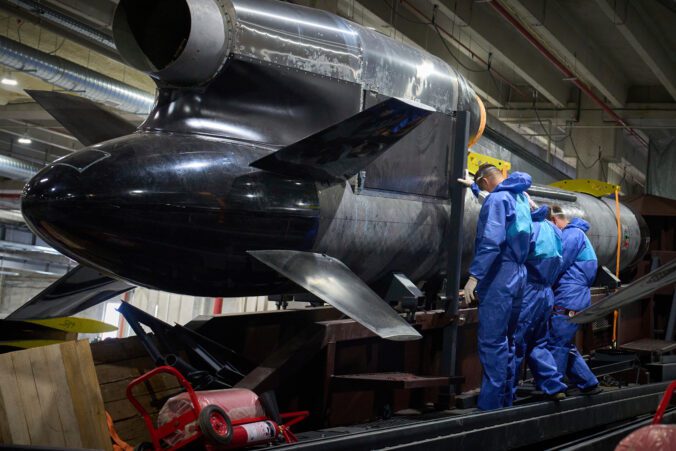
Israel’s claims are based on information about Iran’s development and testing of two-stage intercontinental ballistic missiles over several years. According to available data, these systems can reach distances of approximately 4000 kilometers, placing them among strategic weapons with significant geopolitical impact.
While these missiles, according to Israeli officials, are not primarily intended for attacks against Israel, their potential to target broader geographical areas raises concerns in Europe and international security circles.
Iran has long maintained that its missile program is defensive. However, Western countries warn of its potential to destabilize the region and increase the risk of conflict escalation.
Context of the Ongoing Conflict
The warning comes amid ongoing military operations between Israel and Iran. According to Israeli leadership, the country is approximately “halfway” through its offensive aimed at weakening Iran’s military capabilities.
The tension is not limited to direct confrontations between these two states. The conflict has a broader regional dimension, involving several Middle Eastern countries and strategic areas such as the Persian Gulf and the Indian Ocean.
It is also a period of heightened sensitivity—Israel’s army has confirmed that operations will continue even during the Passover holiday, underscoring the seriousness of the situation and readiness for a prolonged conflict.
Reactions and Possible Consequences
European countries are responding cautiously, but security analysts warn that the development of Iran’s missile program could lead to a reassessment of defense strategies on the continent. The discussion focuses mainly on strengthening air defense systems and coordination within NATO.
The possibility that European cities could fall within the range of ballistic missiles changes the perception of security threats and increases pressure on political leaders to take preventive measures.
However, experts also point out that the mere range of missiles does not imply an immediate threat of attack. Instead, it is a strategic factor influencing geopolitical decision-making and negotiations.
Current analyses of security risks and geopolitical trends are also provided by Live World Updates, which monitors the conflict’s developments in broader contexts.
Analytical Conclusion
The statements from Israeli leadership highlight the evolving nature of modern conflicts, where technological progress significantly expands the geographical reach of potential threats. Iran’s missile program thus becomes not only a regional but also a global security concern.
Future developments will depend on a combination of diplomatic negotiations, military measures, and international cooperation. Europe finds itself in a situation where it must increasingly consider risks that were previously regarded as distant.
Geography: Middle East, Europe, Indian Ocean, Persian Gulf
#IranMissiles #EuropeanSecurity #MiddleEastConflict #GlobalThreats