
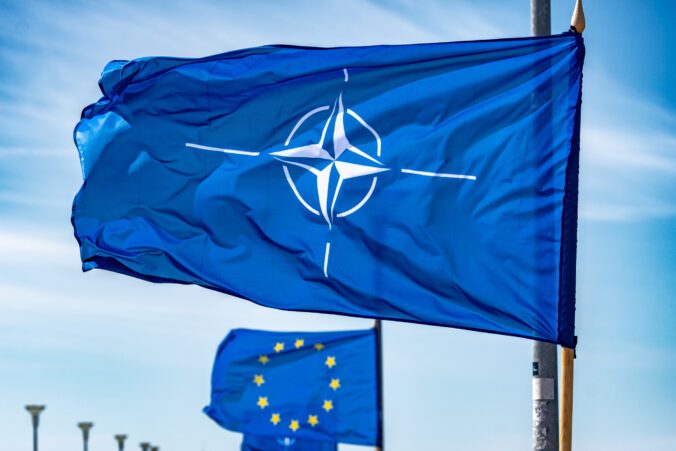
NATO Faces Unprecedented Security Challenges
The North Atlantic Treaty Organization (NATO) is entering a phase that security analysts have termed a “new epoch of strategic uncertainty.” Since its inception in 1949, as a defensive pact against Soviet expansion, NATO has been a cornerstone of global security architecture. Today, the alliance faces its most significant security test since the end of the Cold War, as it grapples with multiple concurrent conflicts that exert unprecedented pressure on its resources and strategic focus.
The war in Ukraine, escalating tensions in the Middle East, and the rise of hybrid threats are reshaping NATO’s strategy. As member states increase their defense budgets and bolster the eastern flank, the alliance’s unity and readiness for long-term conflict remain critical questions. The issue is no longer whether NATO is relevant, but how it can adapt to a world where conflicts unfold both conventionally and digitally.
Ukraine: A Test of Unity and Endurance
The conflict in Ukraine represents the most significant security crisis in Europe since World War II. While Ukraine is not a NATO member, the alliance has extended extensive support through its member states—from training to advanced weaponry. However, NATO has emphasized its intention to avoid direct involvement in the conflict, striving to balance support while preventing direct confrontation with Russia. The eastern flank of the alliance—Poland, the Baltic States, and Romania—has been significantly reinforced, with troop deployments and rotational missions sending a clear message of collective defense under Article 5.
Defense Spending and Modernization
After years of underfunding, many member states have dramatically increased their defense budgets, making the 2% GDP target a political priority. Investments are being directed towards:
- Air defense
- Cybersecurity
- Modernization of aviation
- Rapid reaction forces
Simultaneously, NATO is developing new logistical capabilities for the rapid movement of forces across Europe.
Hybrid Warfare and Cyber Threats
Modern conflicts are no longer fought solely with tanks and artillery. Cyberattacks on infrastructure, disinformation campaigns, and disruptions to energy grids present a new dimension of warfare. NATO has established specialized cyber defense centers and collaborates with the private sector. The challenge remains how to respond to attacks that fall below the threshold of open war.
The Middle East and Global Dimension
Tensions between Iran, Israel, and other regional players increase pressure on NATO member states. While some countries are directly involved in regional operations, others support diplomatic solutions. Although the alliance as a whole has not entered the conflict, it is enhancing the protection of maritime routes and energy infrastructure.
Unity as a Strategic Weapon
NATO’s greatest strength lies in its collective nature, which is also its most significant challenge. Member states have varying political priorities and domestic pressures. Maintaining unity is therefore crucial for credible deterrence.
Expansion of the Alliance
Following the Russian invasion, NATO has expanded to include new member states, enhancing its northern dimension. This expansion has reshaped the strategic map of Europe, increasing pressure on Russia, while also implying greater responsibility for protecting a longer border.
The Future of NATO
The alliance is currently navigating between three priorities:
- Deterring Russia
- Readiness for hybrid threats
- Stabilizing the broader global environment
If NATO can maintain political cohesion and technological modernization, it can remain a pillar of Western security.
Conclusion
NATO is no longer an organization reacting to a single dominant conflict. Today’s world is multipolar, unstable, and technologically interconnected. The alliance faces a test that will assess its ability to adapt. The outcome of this transformation will determine the security balance of Europe and the broader transatlantic space.
Geography:
Continent: Europe / North America
Country: NATO Member States
City: Brussels (NATO Headquarters)
#NATO #Security #Geopolitics #Ukraine