
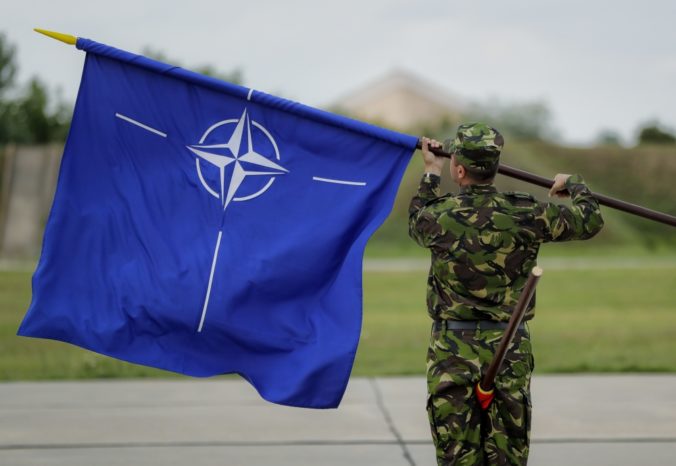
NATO is preparing a significant expansion of its defensive posture along its eastern flank, signaling a long-term strategy aimed at deterring Russia through advanced technology, increased stockpiles of weapons and ammunition, and a new layer of robotic and semi-autonomous defense systems.
According to a senior NATO official speaking to the German newspaper Welt am Sonntag, the alliance is responding directly to lessons learned from Russia’s war in Ukraine. The plan envisions a multi-layered defense designed to slow or halt an attacker at the very outset of a conflict.
At the core of the strategy is the creation of a deterrence zone along NATO’s borders with Russia and Belarus. This zone would be protected primarily by remotely operated and semi-automated systems, forcing any adversary to overcome a dense technological barrier before advancing further.
Brigadier General Thomas Lowin, deputy chief of staff at NATO’s Allied Land Command in Izmir, said the system would rely heavily on integrated surveillance. Sensors operating on land, in the air, in space and across digital networks would feed real-time data to allied forces. Radar systems, acoustic and optical sensors, satellites, drones and reconnaissance aircraft would all contribute to a unified operational picture.
A so-called “hot zone” would be established directly at the border, where armed drones, robotic vehicles and automated air defense systems could be deployed to disrupt and weaken enemy forces. The objective, Lowin said, is to rapidly strip an attacker of initiative and combat effectiveness.
Despite the emphasis on automation, NATO insists that decisions regarding the use of force will remain under human control. Lowin stressed that unmanned systems alone cannot provide lasting deterrence. Troops on the ground will remain essential to hold territory and ensure security.
The strategy, officially known as the Eastern Flank Deterrence Line, reflects the evolving nature of modern warfare. NATO member states will be responsible for implementation, including funding and deployment.
The move underscores a broader shift within the alliance: preparing not for short-term crises, but for a sustained period of confrontation in which technological superiority and rapid response will be decisive.