
North Korea’s Ambitious Rocket Engine Test: A Step Towards Strategic Dominance
Summary:
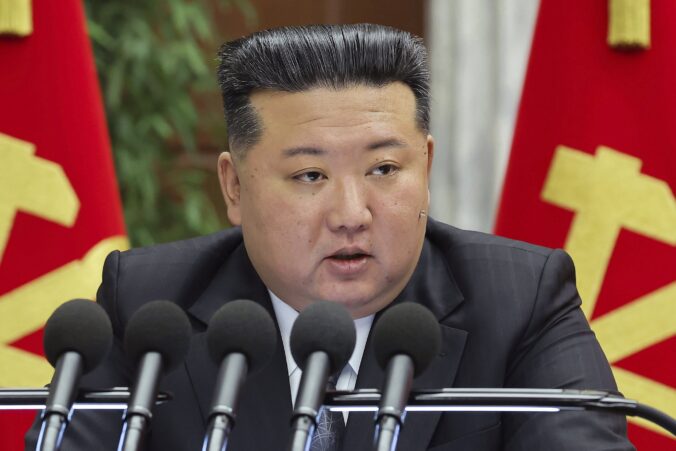
- North Korean leader Kim Jong-un oversaw the test of a high-performance solid-fuel rocket engine.
- The new engine could carry multiple nuclear warheads and improve the ability to overcome US defenses.
- The test is part of a five-year plan to modernize strategic weapons.
- Experts highlight ongoing technological challenges, but Pyongyang’s progress is evident.
North Korea continues to advance its strategic weapons capabilities. The latest test of a high-thrust solid-fuel rocket engine, personally overseen by leader Kim Jong-un, signals the nation’s ambition to enhance its ability to strike the United States. This development comes amid heightened geopolitical tensions and confirms the ongoing modernization of North Korea’s missile arsenal.
According to the state agency KCNA, the new engine achieved a maximum thrust of approximately 2500 kilotons, marking a significant improvement over last year’s test. Such technological advancements are crucial for the development of intercontinental ballistic missiles (ICBMs) capable of carrying nuclear warheads over long distances.
Strategic Importance of the Test
The increased engine performance indicates Pyongyang’s intent to boost its missile capacity, particularly regarding the ability to carry multiple warheads simultaneously. This approach, known as MIRV (Multiple Independently targetable Reentry Vehicle), could significantly complicate US defense systems designed to intercept individual targets.
From a technological standpoint, solid-fuel rockets represent a major advancement. Unlike older liquid-fuel systems, they do not require lengthy preparation before launch, reducing their vulnerability to preemptive strikes. This aspect is one of the main reasons why North Korea has focused on their development in recent years.
For more detailed analyses of geopolitical trends and military capabilities, visit Live World Updates, a portal dedicated to global security and strategic issues.
Context and Geopolitical Background
The test is part of a broader five-year military development program announced by Kim Jong-un, aimed at “irreversibly consolidating” the nation’s status as a nuclear power. In a recent speech to parliament, he also sharply criticized the United States, accusing it of aggression and destabilizing the global order.
These statements follow long-standing tensions between Washington and Pyongyang, which escalated after the failure of diplomatic talks in 2019. Since then, North Korea has accelerated its missile testing and weapons modernization efforts.
In recent years, the country has tested various types of ICBMs, including solid-fuel systems that have the potential to reach the US mainland. This development raises concerns not only in the United States but also among its regional allies, particularly South Korea and Japan.
Technological Limitations and Doubts
Despite the visible progress, experts caution that North Korea still faces several technological hurdles. A key challenge remains ensuring that nuclear warheads can survive the extreme conditions of reentry into the atmosphere.
Some analysts, however, downplay these concerns. They point out that Pyongyang has been investing in its missile programs for decades and is gradually overcoming technical shortcomings. From this perspective, it may only be a matter of time before the country achieves a fully functional capability to strike targets on the American continent.
Potential Implications for Global Security
The latest test is likely to heighten tensions between North Korea and the United States. Washington may respond by tightening sanctions or increasing its military presence in the region. At the same time, the issue of North Korea’s nuclear program is expected to be a topic of discussion at the United Nations once again.
The future of diplomatic negotiations remains an open question. While Kim Jong-un has indicated a willingness to negotiate, he has conditioned it on a fundamental change in the US stance, particularly regarding nuclear disarmament. This position significantly complicates the possibility of reaching a compromise.
Conclusion
The test of the new rocket engine represents another step in North Korea’s systematic strategy to enhance its military capabilities and cement its status as a nuclear power. Although the country may not yet possess a fully reliable system capable of striking the United States, the trend of technological progress is clear. The development of the situation will be crucial for the security architecture in Asia and on a global scale.
Geography: North Korea
#NorthKorea #RocketTest #GlobalSecurity #KimJongUn