
AI SUMMARY – What You Should Know Before Reading
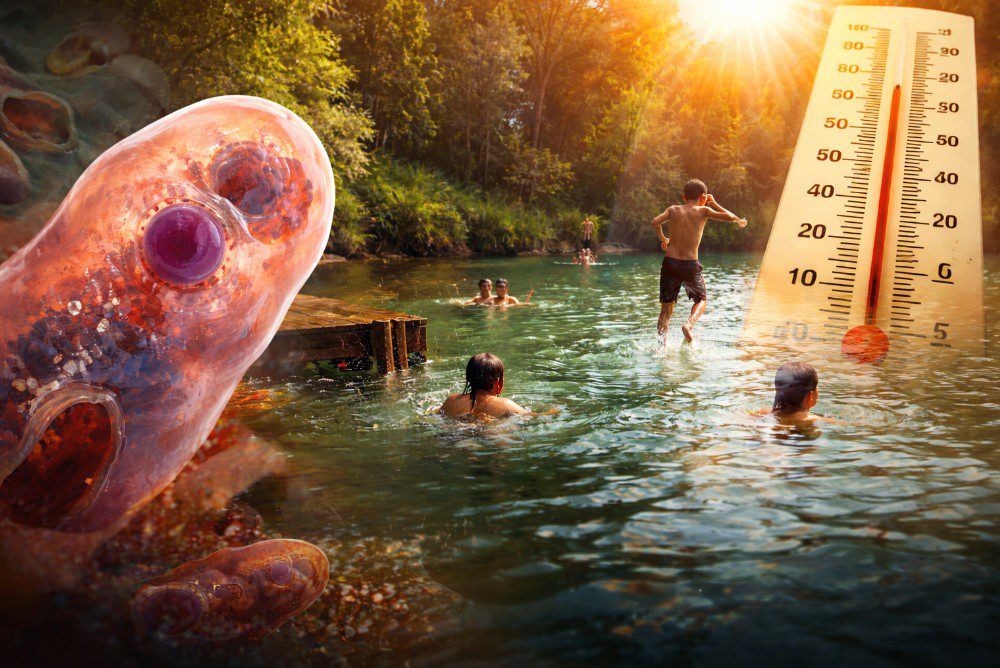
- The deadly amoeba Naegleria fowleri is expanding into new regions as water temperatures rise.
- Infections are extremely rare but fatal in up to 99 percent of cases.
- The risk comes from warm freshwater entering the nose, not from drinking water.
- Europe has already recorded cases, including a confirmed fatal infection in Slovakia.
LONDON — Free-living amoebas, microscopic single-celled organisms found naturally in soil and water, are drawing increased attention from scientists and public health authorities. The concern centers on a particularly dangerous species, Naegleria fowleri, often referred to as the “brain-eating amoeba,” whose spread is being accelerated by climate change.
The warning comes from microbiologist Manal Mohammed, who outlined the growing risks in an analysis published by The Conversation, a science-focused academic media platform. According to Mohammed, rising global temperatures are creating favorable conditions for these organisms in regions where they were once absent or extremely rare.
An Invisible Threat in Warm Water
Free-living amoebas exist worldwide in lakes, rivers, ponds, hot springs and even in man-made water systems. Most species pose no threat to humans. A small number, however, can cause devastating infections when they enter the body under specific circumstances.
Naegleria fowleri thrives in warm freshwater, particularly at temperatures between 30 and 40 degrees Celsius (86–104°F). Historically, it was associated primarily with tropical and subtropical regions. Today, prolonged heat waves and warming summers are enabling the organism to survive farther north and in parts of Europe previously considered low-risk.
A Nearly Always Fatal Infection
Infection does not occur through drinking contaminated water. Instead, it happens when water containing the amoeba enters the nose, typically during swimming, diving or jumping into warm freshwater. The organism travels along the olfactory nerve to the brain, where it destroys brain tissue.
The resulting illness, known as primary amoebic meningoencephalitis (PAM), progresses rapidly and is almost always fatal. According to data from the U.S. Centers for Disease Control and Prevention (CDC), the mortality rate ranges from 95 to 99 percent. Symptoms often appear within days and include severe headache, fever, nausea, confusion and seizures.
Why the Amoeba Is So Hard to Eliminate
Although Naegleria fowleri is sensitive to chlorine and standard disinfectants, eliminating it in real-world environments is difficult. The amoeba can hide inside biofilms—slimy layers of microorganisms that form inside pipes, water tanks and natural aquatic systems—shielding it from chemical treatment.
In adverse conditions, the organism can also transform into a cyst, a dormant and highly resilient form capable of surviving harsh environments. Scientists further warn of a so-called “Trojan horse” effect: amoebas can harbor other pathogens inside their cells, including bacteria responsible for Legionnaires’ disease and potentially even viruses or fungi.
Climate Change as a Risk Multiplier
Rising temperatures, longer summers and increased recreational use of natural water bodies are expanding the geographic footprint of Naegleria fowleri. Regions that were once too cool to sustain the organism are now becoming suitable habitats.
Europe has already reported isolated cases. In Spain, a 10-year-old girl survived an infection in 2018—an exceptionally rare outcome. In Italy, a nine-year-old boy was infected during an unusually hot summer in 2004 while swimming in the Po River. Belgium has also documented cases.
Most recently, Slovak health authorities confirmed the country’s first fatal infection: an 11-year-old boy who became ill after swimming in warm freshwater. The case prompted increased monitoring, stricter inspections of bathing sites and renewed public warnings during heat waves.
Low Risk, High Awareness
Health experts emphasize that infections remain extremely rare and that the risk to the general population is very low. Nevertheless, they stress the importance of awareness and prevention as climate conditions change.
Recommended precautions include avoiding diving or submerging the head in warm freshwater during periods of high temperatures, using nose clips when swimming, and ensuring that water used for nasal rinsing is boiled or sterile. Proper maintenance of pools and water systems also plays a crucial role in reducing risk.
The spread of Naegleria fowleri is increasingly viewed as another example of how climate change is reshaping public health threats—introducing rare but severe risks into regions unaccustomed to them.