
Key points:
- Slovakia will file a lawsuit against the EU ban on Russian gas imports
- Prime Minister Robert Fico argues the decision required unanimous approval
- Government seeks a preliminary ruling to suspend the regulation
- Case could reshape EU decision-making and veto powers
Introduction
Slovakia is preparing to take a major legal step against the European Union, challenging a ban on Russian gas imports that came into force in early 2026. The dispute is not only about energy policy but also about how decisions are made within the EU, raising broader questions about sovereignty and institutional balance.
Main section
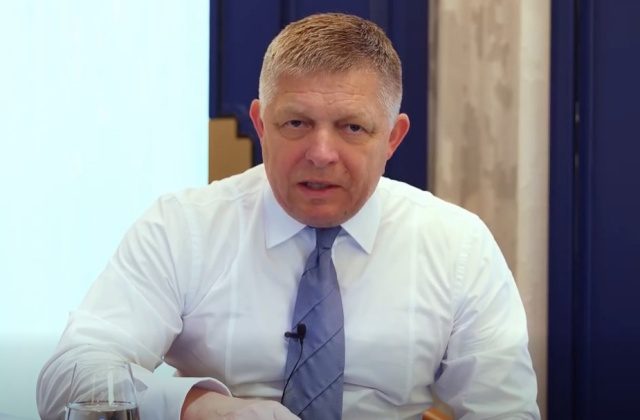
The Slovak government announced it will file a case before the Court of Justice of the European Union, arguing that the gas import ban was adopted through an improper legal procedure. According to Prime Minister Robert Fico, such a measure should have required unanimous approval from all member states rather than a qualified majority vote.
Fico claims the process bypassed the right of individual countries to veto decisions with significant national impact. In his view, the regulation sets a precedent that could weaken the position of smaller or more energy-dependent member states within the Union.
Justice Minister Boris Susko elaborated on the legal argument, stating that although the regulation was formally adopted under the EU’s trade policy framework, its nature is restrictive and closely linked to foreign and security policy. If classified under that domain, unanimous consent would have been required.
Slovakia is also expected to request an interim measure from the court to suspend the regulation while the case is under review. This is a critical point for Bratislava, as legal proceedings at the EU level can take years, during which the ban would remain in force and continue to affect the country’s economy.
Hungary has already filed a similar legal challenge and Slovakia has joined that action, but the government decided to pursue its own case to ensure a stronger legal position and active participation in proceedings.
Energy considerations are central to the dispute. Slovakia, as a landlocked country, has limited access to alternative gas supply routes compared to coastal EU states. This structural disadvantage makes it more vulnerable to supply disruptions and price fluctuations.
The government argues that the ban could significantly impact industrial competitiveness, energy prices, and overall economic stability. These concerns reflect broader tensions within the EU, where member states face different levels of exposure to energy transitions and geopolitical pressures.
Analysts suggest the case goes beyond energy policy. It represents a potential test of the limits between EU competencies and national sovereignty, particularly in areas where economic and security policies intersect.
The outcome could have far-reaching implications. A ruling in Slovakia’s favor might reinforce the importance of unanimity in certain decisions, while a rejection could confirm the EU’s ability to act more flexibly using qualified majority voting.
Conclusion
Slovakia’s legal challenge marks a significant moment in the evolution of EU governance. The case will not only determine the future of the Russian gas ban but could also redefine how power is balanced between member states and European institutions. As the energy transition continues, such disputes are likely to become more frequent.
For more global analysis, visit https://www.liveworldupdates.com/.