
Bratislava – With only months left before the European Union’s Recovery and Resilience Facility reaches its final implementation phase, Slovakia finds itself under mounting pressure. A political dispute this week highlighted deep divisions over whether the government has the capacity to deliver key reforms in time to secure billions of euros in EU funding.
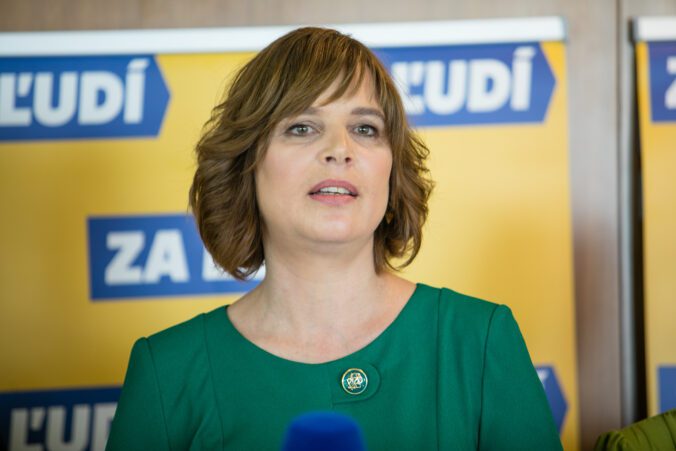
Opposition lawmaker Veronika Remišová accused the government of mismanagement and strategic failure after the cabinet approved fast-track legislation amending the law on information technologies in public administration. According to the government, the amendment is essential to meeting a key recovery milestone. Without it, Slovakia risks losing part of its allocated funds.
Opposition: “Governance by improvisation”
Remišová described the move as evidence of what she called “chaotic governance.” In her view, the ruling coalition had more than two years to prepare the necessary reforms but failed to act until deadlines became unavoidable.
“The Recovery Plan did not appear overnight. It was prepared, handed over, and partially implemented,” she said, arguing that the government’s last-minute response undermines both domestic credibility and Slovakia’s standing within the EU.
She emphasized that several digital public services had already been launched by the previous administration, forming a foundation that should have been expanded rather than neglected.
Digital seniors and delayed milestones
One of the most contentious issues is the “Digital Seniors” program, designed to improve digital literacy among older citizens. The project is a formal milestone under the Recovery Plan, meaning its completion is directly tied to EU funding.
According to Remišová, only about half of the target has been achieved so far, leaving more than 100,000 seniors to be trained within a limited timeframe. Failure to meet the target, she warned, could result not only in financial losses but also in reputational damage for Slovakia within European institutions.
Government response: Fixing inherited problems
The Ministry of Investment, Regional Development and Informatization rejected the criticism, stressing that the current leadership has been in office for just ten months. Officials argue they are dealing with long-standing delays inherited from previous governments.
“Blaming the current minister for years of inaction predating his mandate distorts reality,” the ministry said in a statement. It also disputed the opposition’s figures, noting that more than 55,000 seniors have already completed digital training and that progress has accelerated significantly in recent months.
A broader test of governance
Beyond the immediate dispute, the controversy underscores a structural challenge facing Slovakia: maintaining continuity in long-term public policy across changing political cycles. Large-scale reform programs, especially those tied to EU funding, require consistent planning and execution—areas where Slovakia has struggled in the past.
For Brussels, the Recovery Plan is a benchmark for assessing member states’ ability to use shared resources effectively. For Slovakia, it has become a measure of administrative maturity and political accountability.
Analytical conclusion
While the opposition frames the situation as a failure of leadership and foresight, the government presents itself as attempting damage control under intense time pressure. What remains clear is that the looming deadlines have exposed systemic weaknesses in coordination and strategic governance. The outcome will not only affect public finances but may also shape public trust in the state’s ability to manage complex reforms.
Did you notice any errors or have concerns? Let us know!