
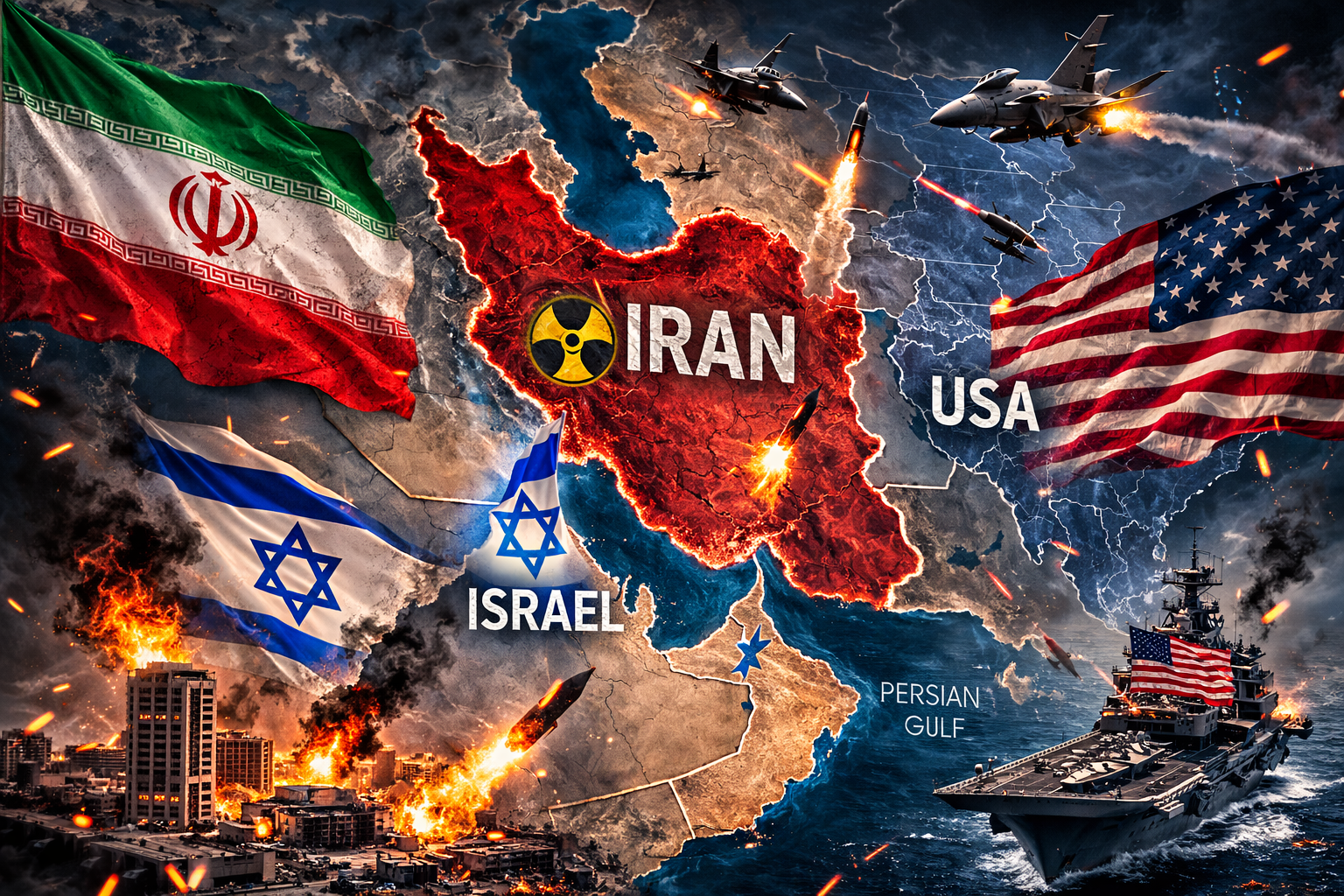
Tensions Escalate into Open Conflict
The longstanding tension between the United States and Iran has intensified in recent days, escalating into open military confrontations. What was once primarily a diplomatic and economic standoff, marked by sanctions and proxy conflicts, has now entered a potentially perilous stage. Washington and Tehran have both launched a series of military operations, signaling a shift beyond traditional proxy wars in the region. Both nations justify their actions as responses to security threats and as defense of national interests.
The situation raises significant concerns about a broader regional escalation that could engulf the entire Middle East. The international community has been vocal in urging for immediate de-escalation and a return to diplomatic negotiations to prevent further destabilization.
Historical Context of US-Iran Relations
The relationship between the US and Iran has been fraught with tension for over four decades. The conflict can be traced back to the Iranian Revolution of 1979, which fundamentally altered the geopolitical landscape and severed strategic ties with Washington. Since then, the discord has manifested in various forms, from economic sanctions to military incidents in the Persian Gulf.
A pivotal moment in recent years was the 2015 nuclear deal, aimed at curbing Iran’s nuclear program in exchange for sanction relief. However, the US withdrawal from the agreement reignited tensions, pushing both countries closer to conflict.
Strategic Importance of the Region
The US-Iran conflict holds substantial geopolitical implications, given that the Persian Gulf is one of the world’s most crucial energy regions. The strategic Strait of Hormuz, through which a significant portion of the world’s oil exports pass, is particularly critical. Any military activity here can have immediate repercussions on global energy markets, affecting economies worldwide.
For many nations, stability in this region is essential not only for security reasons but also from an economic perspective.
Risk of Regional Escalation
Analysts warn that the conflict between the US and Iran may quickly draw in other regional players. Iran maintains strong ties with several armed groups in the region, while the US has military bases and allies throughout the Middle East. This interconnectedness means that even a limited conflict could have broader geopolitical consequences.
Some countries are endeavoring to mediate a diplomatic solution, calling for an immediate cessation of military operations. Current geopolitical analyses and updates on the conflict can be followed on the Live World Updates portal.
Economic and Security Implications
Beyond security concerns, the conflict has the potential to significantly impact the global economy. Energy markets are particularly sensitive to developments in the region, with oil prices often experiencing volatile swings in response to geopolitical events. Investors are closely monitoring financial markets and logistical routes that could be disrupted by the conflict.
If military operations were to expand, it could disrupt international trade and transportation in one of the world’s most critical commercial zones.
Analytical Conclusion
The conflict between the United States and Iran represents one of the most serious geopolitical crises in recent years. While the scale of fighting remains limited for now, the potential for escalation is exceptionally high. Future developments will depend on both military and diplomatic actions by the involved parties and the ability of the international community to mediate a resolution that prevents a wider regional conflict.
Geography: Asia – Iran – Tehran
#USIranConflict #MiddleEastTensions #GlobalSecurity #Geopolitics