
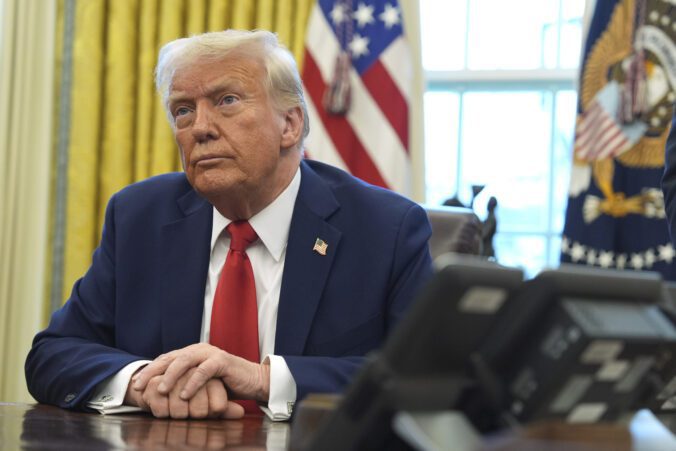
Trump’s Call to Action: Global Defense of a Critical Maritime Route
WASHINGTON / PARIS – In a move that has sparked renewed geopolitical discussions, former U.S. President Donald Trump has urged nations reliant on oil imports through the Strait of Hormuz to take an active role in safeguarding the crucial maritime passage. The United States, he asserted, stands ready to help coordinate a joint international effort to secure one of the world’s most vital energy routes.
Trump made his stance known on the social media platform Truth Social, emphasizing that the U.S. has significantly weakened Iran “militarily and economically,” and it is now time for other countries benefiting from global trade routes to contribute to their security. “Countries receiving oil through the Strait of Hormuz must ensure its safety — and the United States will greatly assist them,” Trump wrote. He suggested that a collective effort could enhance the stability, security, and smooth operation of the global energy market.
The Strategic Importance of the Strait of Hormuz
The Strait of Hormuz is a critical junction in the world’s energy system, with approximately one-fifth of global oil supplies passing through it daily. This key route facilitates the export of oil from the Persian Gulf to Europe, Asia, and other regions. Any disruption to traffic in this area can immediately impact global oil prices and the stability of energy markets. Historically, the strait has been a flashpoint of tension between Iran and Western nations.
Trump hinted at the possibility of multiple countries deploying warships to the area to ensure maritime security, naming nations such as China, France, Japan, South Korea, and the United Kingdom. He suggested that a coordinated presence of international naval forces might deter potential attacks on commercial ships.
Divergent Reactions from Allies
Not all potential partners responded positively. The French Ministry of Foreign Affairs rejected the notion of dispatching warships to the Strait of Hormuz. Paris stated that the aircraft carrier Charles de Gaulle strike group remains in the eastern Mediterranean and currently has no plans to move to the Persian Gulf. French officials also urged Washington to avoid statements that could further escalate tensions in the region.
The differing stances among allies reflect a broader debate on how the international community should respond to security threats in strategic maritime areas.
Geopolitical Context and Potential Consequences
Trump’s comments come amid heightened tensions in the Middle East and ongoing disputes between the United States and Iran. Washington has long criticized Iranian military activities in the region and warned of possible attacks on energy infrastructure or commercial vessels. Analysts caution that militarizing the area could lead to further escalation, but it might also strengthen the protection of one of the world’s most important trade routes.
For in-depth analyses of global geopolitical events and security issues, visit the international news portal Live World Updates.
Analytical Summary
The debate over the protection of the Strait of Hormuz highlights the sensitivity of the global energy system to geopolitical tensions. Washington’s call for a joint defense of this strategic route may signal a shift toward broader international cooperation, yet it also reveals divergent approaches among allies to addressing regional security risks.
Geography: Middle East
Hashtags: #StraitOfHormuz #GlobalSecurity #OilTrade #TrumpPolicy