
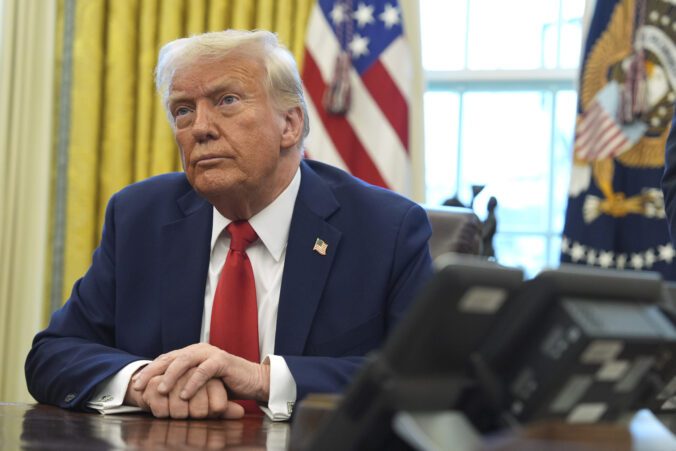
Former U.S. President Donald Trump has moved to broaden the international framework shaping the postwar future of Gaza Strip, inviting Turkish President Recep Tayyip Erdogan and Argentine President Javier Milei to join the newly formed Gaza Peace Council. The expansion underscores Trump’s ambition to assemble a high-profile, globally representative body to supervise reconstruction and interim governance following months of devastating conflict.
Turkey confirmed on Saturday that Erdogan had received a formal letter from Trump inviting him to become a founding member of the council. The move carries particular regional significance: Ankara has long positioned itself as a vocal advocate for Palestinian interests while maintaining complex diplomatic and security relationships across the Middle East. Erdogan’s potential participation could lend the initiative greater credibility in parts of the Muslim world, while also introducing new political sensitivities.
Milei, whose foreign policy has emphasized close alignment with Washington and Israel, publicly acknowledged his invitation on social media, calling participation in the council an honor. His inclusion broadens the initiative beyond the traditional Middle Eastern and European diplomatic sphere, reinforcing Trump’s effort to frame the council as a global undertaking rather than a narrowly regional mechanism.
Trump has already named several prominent figures as founding members. Among them are U.S. Secretary of State Marco Rubio and former British Prime Minister Tony Blair, both of whom bring extensive experience in international diplomacy. Blair, who previously served as the Middle East envoy for the Quartet, said he was honored by the appointment and praised Trump’s leadership in launching the initiative.
According to the White House, the council’s executive leadership will also include Trump’s Middle East envoy Steve Witkoff, Trump’s son-in-law Jared Kushner, and World Bank President Ajay Banga. Trump himself is expected to serve as chairman. Additional members are to be announced in the coming weeks, suggesting the council’s final composition remains a work in progress.
The Gaza Peace Council is a central pillar of Trump’s 20-point peace plan, which last year paved the way for a ceasefire between Israel and the militant group Hamas. Under the proposal, Gaza would be administered by a temporary technocratic Palestinian committee operating under the council’s oversight. The aim, according to proponents, is to separate day-to-day governance and reconstruction from factional politics while longer-term political arrangements are negotiated.
On the ground, the council’s work would be coordinated by former Bulgarian defense minister and former U.N. Middle East envoy Nikolay Mladenov, who is expected to bridge the gap between strategic decision-making and practical administration in Gaza.
Supporters of the initiative argue that the council’s broad international makeup could provide both financial backing and political guarantees for rebuilding Gaza’s shattered infrastructure. Critics, however, question its legitimacy, noting that key regional actors and segments of Palestinian society have yet to formally endorse the framework. Others warn that without clear mechanisms for accountability and local participation, the council could struggle to translate diplomatic ambition into durable stability.
As the Gaza Peace Council continues to take shape, its expansion highlights both the urgency of postwar planning and the profound challenges ahead. Whether Trump’s high-profile initiative can evolve into a viable model for governance and reconstruction will depend on its ability to reconcile competing interests, secure regional buy-in, and deliver tangible improvements for Gaza’s civilian population.