
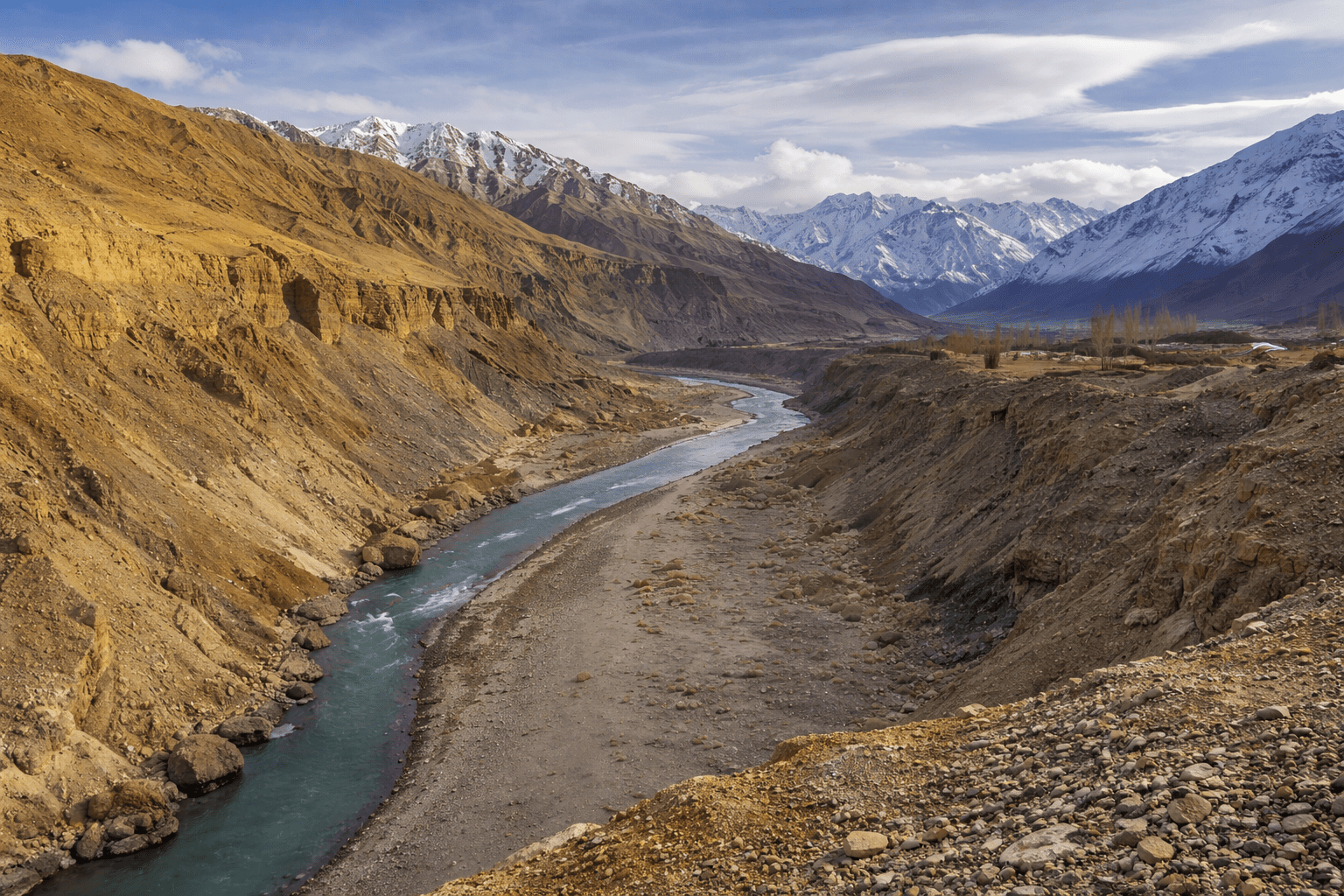
A Paradox of Abundance: Tajikistan’s Water Woes
Summary:
- A significant portion of Tajikistan’s population lacks access to safe drinking water.
- Water in some regions is contaminated with pesticides, waste, and bacteria.
- Outdated infrastructure and climate conditions exacerbate the issue.
- The government aims to provide universal access to drinking water by 2040.
Tajikistan, home to some of Central Asia’s largest freshwater reserves, finds itself in a paradoxical situation—millions of its citizens are deprived of safe drinking water. This dilemma highlights the stark contrast between its natural wealth and the inadequate infrastructure that fails to meet essential needs.
In southern regions like Balch, residents rely on water from open irrigation channels, often contaminated with waste, bacteria, and pesticides from agricultural activities. Despite the risks, locals use this water for drinking, cooking, and hygiene.
Water Scarcity in a Land of Plenty
Official data reveals that only about 41% of Tajikistan’s nearly ten million inhabitants have access to safe drinking water. Even fewer have access to sanitation facilities, marking the lowest figures in the Central Asian region.
This situation is particularly perplexing given that Tajikistan, alongside Kyrgyzstan, holds approximately two-thirds of the region’s water resources. The country plays a crucial role in water supply for neighboring states, thanks to its thousands of glaciers and mountain rivers.
The problem is not a lack of water, but rather its distribution and quality. Many areas lack the basic infrastructure needed to ensure safe water supply.
Health Risks and Population Impact
Using contaminated water has serious health repercussions. A scientific study published in 2024 showed that, on average, more than 1,600 deaths per year in Tajikistan from 1990 to 2020 were related to poor water quality.
Residents try to minimize these risks by letting water stand, filtering, or boiling it. However, these measures do not guarantee safety. As a result, digestive tract diseases and other health issues are common in many households.
In drier regions, the situation is even more complicated. Water must be transported by tankers and stored in tanks, where it quickly deteriorates. This supply method is financially and logistically unsustainable in the long run.
Infrastructure and Historical Factors
One of the main reasons for the current state is the outdated water infrastructure, dating back to the Soviet era. Many facilities are damaged or non-functional, and investment in their renewal has been consistently inadequate.
The situation worsened due to the civil war in the 1990s, which damaged key systems. Natural disasters like floods and landslides also regularly disrupt the already fragile infrastructure.
According to the Eurasian Development Bank, part of the water network operates only partially, with a significant portion of equipment out of service. Modernization requires extensive investment and long-term planning.
Political Ambitions and International Dimension
President Emomali Rahmon has long emphasized water’s strategic importance, advocating for it on the international stage. Tajikistan has initiated several UN resolutions focused on water security.
Domestically, the government has devised a plan to ensure universal access to drinking water and sanitation by 2040. Achieving this goal will depend on the ability to mobilize financial resources and use them effectively.
Global Relevance of the Issue
Tajikistan’s situation reflects a broader issue faced by many developing countries—uneven access to essential resources despite their abundance. In the context of climate change and a growing population, water security becomes one of the key challenges of the 21st century.
For more on global trends in resources and infrastructure, visit Live World Updates, a portal dedicated to environmental and economic analyses.
Conclusion
Tajikistan faces a fundamental challenge: transforming its natural wealth into tangible benefits for its people. Without infrastructure modernization and systematic investment, access to drinking water will remain an unattainable luxury for many. Solving this problem will be crucial not only for public health but also for the country’s stability and development.
Geography: Tajikistan
#WaterCrisis #InfrastructureChallenges #GlobalHealth #CentralAsia #AktualizovaneSpravodajstvo