
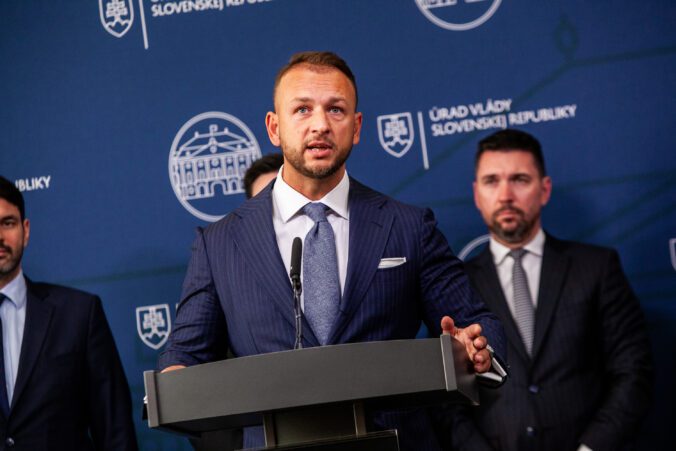
Cash payments in amounts that most people never hold in their hands have once again moved to the center of political attention in Slovakia. Interior Minister Matúš Šutaj Eštok is facing criticism and questions after it emerged that at the end of 2024 he paid more than €12,000 in cash for a luxury vacation in Dubai. A case that would likely have gone unnoticed if it involved a private individual has, in the context of a public office, sparked a broader debate about transparency, political culture, and the boundaries of privacy for public officials.
Cash for a trip to Dubai
According to media reports, the leader of the Hlas-SD party visited a travel agency at the end of 2024 together with his partner, carrying more than €12,000 in cash. They paid approximately €12,500 in banknotes for flights to Dubai and reportedly paid for accommodation in the same way after arriving in the United Arab Emirates. The trip was private and planned outside any official program.
When journalists asked why he chose to pay in cash and whether he usually carries such sums, Šutaj Eštok responded evasively. He stressed that it was a private matter and declined to specify the reasons behind his choice of payment method. He also said that he does not currently carry such an amount of cash with him.
Political reactions: legal, but sensitive
Defense Minister Robert Kaliňák defended his colleague, arguing that cash can, in some situations, speed things up. Prime Minister Robert Fico took a more formal tone. He said he does not “look into anyone’s wallet” and reminded the public that Slovak legislation does not prohibit cash payments. “As far as I know, paying in cash is still allowed,” he said.
It is precisely this tension—between legality and political sensitivity—that lies at the heart of the case. From a legal standpoint, a cash payment of this size does not automatically constitute a violation of the law. From the perspective of public ethics, however, it is a step that can raise questions about the origin of the funds, the oversight of asset declarations, and the signal political leaders send to the public.
Broader context: trust and transparency
In Central European countries, where historical experience with corruption and clientelism has shaped public distrust toward elites, such cases are particularly sensitive. Even if there is no allegation of illegal conduct, the symbolism of cash and luxury destinations can easily become political ammunition.
The opposition and parts of the public argue that senior public officials should act not only in accordance with the law, but also according to higher standards of transparency. Government representatives, on the other hand, emphasize the right to privacy and reject the idea that every personal financial transaction should become a matter of public scrutiny.
Analytical summary
The case of the interior minister’s cash-funded vacation opens more than just questions about a single trip to Dubai; it raises a broader debate about where the line lies between privacy and the public interest. In this instance, the law provides a clear answer, while political culture offers a far more ambiguous one. It is precisely in this gap that distrust emerges—along with growing pressure for public officials to explain their actions in greater detail than would ever be required of an ordinary citizen.