
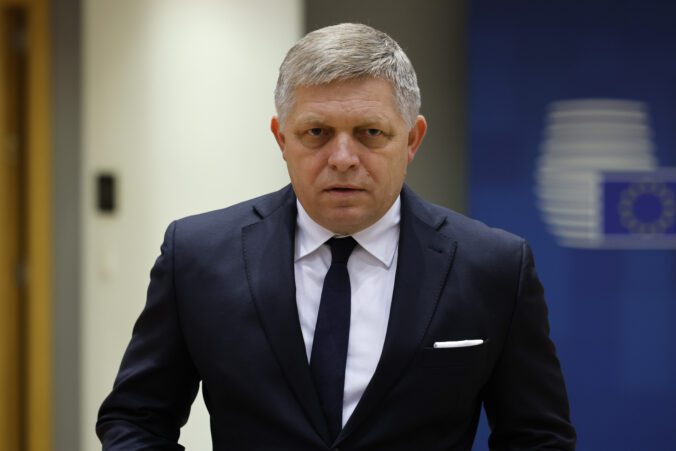
Fico and Orbán Call for EU to Rethink Sanctions: A New Dawn in Energy Diplomacy?
Summary:
- Slovak and Hungarian Prime Ministers urge the EU to reopen dialogue with Russia.
- They demand the lifting of sanctions on Russian energy resources to resume supplies.
- They highlight the looming threat of a deepening energy crisis in Europe.
- Their stance could intensify political tensions within the European Union.
A recent phone call between Slovak Prime Minister Robert Fico and Hungarian Prime Minister Viktor Orbán has reignited the sensitive issue of the European Union’s energy policy. Both leaders have agreed on the pressing need to restore dialogue with Russia and lift the sanctions blocking the import of Russian gas and oil. Their statements come amid growing concerns over energy instability and the economic repercussions of conflicts in the broader geopolitical arena.
Energy as a Pivotal Political Conflict
Fico and Orbán have emphasized that the current EU policy is inadequate in addressing the realities of the energy sector. The Slovak Prime Minister warned that without resuming supplies from Russia, it would be problematic to replenish strategic reserves, especially before the upcoming high-demand seasons.
Fico argued that the European Commission should create conditions for diversified energy supplies, including from Russia. He also urged for the swift resumption of the Druzhba pipeline, historically one of the main oil sources for Central Europe.
Orbán took his stance a step further by warning that Europe is on the brink of a severe energy crisis. He stressed the need for immediate actions to stabilize the market and called on Brussels to reconsider its strategy of gradually disconnecting from Russian energy.
Context: Sanctions and Geopolitical Tensions
In response to the onset of the war in Ukraine, the European Union has imposed extensive sanctions on Russia, with the energy sector being among the most sensitive areas. The goal was to reduce dependency on Russian resources and weaken Moscow’s economic capabilities.
However, this process has also led to side effects. Rising energy prices, industrial pressure, and concerns over resource shortages are increasingly resonating in political debates across member states. While some countries support a tough stance against Russia, others, particularly in Central Europe, are highlighting the economic consequences.
In this context, Fico and Orbán’s statements represent another signal of deepening divisions within the EU. Their stance reflects a pragmatic approach focused on ensuring energy stability, yet it raises questions about the Union’s unified strategy.
Reactions and Potential Consequences
Although the European Commission has not yet directly responded to these calls, similar statements may increase pressure for a review of the sanctions policy. Energy issues are expected to be one of the main topics at the upcoming European meetings.
Critics of this approach warn that easing sanctions could undermine the EU’s political unity and its stance towards Russia. It could also send a signal of willingness to concede under economic pressure, potentially resulting in broader geopolitical ramifications.
On the other hand, the ongoing rise in energy prices and market uncertainty may strengthen the arguments of countries advocating for a more flexible approach. Analysts point out that finding a compromise between political objectives and economic realities will be one of the greatest challenges for European policy in the coming months.
For more in-depth analysis on energy policy and its impact on the global economy, visit Live World Updates, which closely monitors current geopolitical and economic trends.
Broader Implications for the Region
For Central European countries, the issue of energy supplies is of fundamental importance. The historical dependency on Russian resources means that transitioning to alternative sources requires time, investment, and infrastructural changes.
The calls from Slovakia and Hungary can also be seen as an attempt to protect national economies during a period of heightened uncertainty. Simultaneously, they highlight the need for a coordinated European solution that considers the diverse starting conditions of individual states.
Conclusion
The conversation between Robert Fico and Viktor Orbán has underscored the growing disparities in approaches to the EU’s energy policy. While some emphasize geopolitical principles, others stress economic realities and the need for immediate solutions. The outcome of this tension will significantly impact the future shape of the European energy strategy and the unity of the Union itself.
Geography: Europe, Slovakia, Hungary, Russia
#EU #Russia #EnergyCrisis #Sanctions #AktualizovaneSpravodajstvo