
Hungary Deploys Military to Protect Key Pipeline Amid Rising Tensions
Summary:
- Hungary plans to deploy the military to safeguard the TurkStream pipeline.
- Explosive devices found in Serbia raise concerns over energy infrastructure security.
- Budapest hints at possible Ukrainian involvement, which Kyiv denies.
- The opposition suggests potential political manipulation ahead of elections.
Amid escalating concerns regarding energy security in Central Europe, the Hungarian government has announced plans to deploy military forces to protect the TurkStream pipeline on its territory. This decision follows the discovery of explosives near the pipeline’s route in neighboring Serbia, sparking fresh questions about the security of key energy infrastructure in the region.
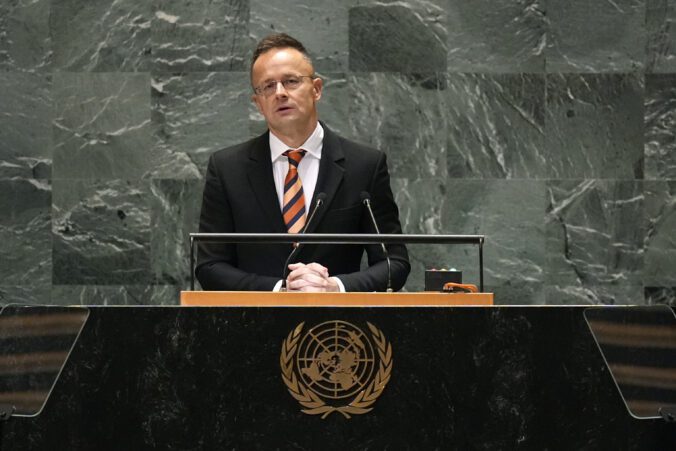
Hungary’s Foreign Minister, Péter Szijjártó, has labeled the situation a serious threat, emphasizing the need for immediate action. According to Szijjártó, military forces will guard the pipeline section from the Serbian-Hungarian border to the Slovak border.
The Serbian Incident as a Catalyst
Budapest’s decision came after Serbian President Aleksandar Vučić revealed that security forces found two backpacks containing explosives near the pipeline in Kanjiža. This location is only a few kilometers from the Hungarian border and is part of the Balkan Stream pipeline route, an extension of TurkStream.
Hungarian officials suspect a potential sabotage attempt with serious implications for gas supplies. TurkStream is currently a major route for transporting Russian gas to Europe.
The Strategic Importance of TurkStream
TurkStream plays a crucial role in the region’s energy supply. According to Prime Minister Viktor Orbán, it covers about 60% of Hungary’s gas consumption. Following the halt of Russian gas transit through Ukraine in early 2025, its significance has only grown.
Securing this infrastructure is, therefore, a priority not only for Hungary but also for other Central European countries, including Slovakia. Any disruption in supply could have immediate economic consequences.
For regular analyses on energy security and geopolitical contexts, visit Live World Updates, a portal that closely follows developments in the region.
Controversial Interpretations of the Incident
The Hungarian government suggests that Ukraine might be behind the incident, linking it to the broader conflict and efforts to restrict Russian energy supplies to Europe.
Kyiv has categorically denied these allegations. A spokesperson for Ukraine’s Ministry of Foreign Affairs stated that Ukraine is not involved and suggested it could be a false flag operation.
These differing interpretations highlight the deep political tensions among stakeholders, complicating an objective assessment of the situation.
Opposition Raises Political Context
Hungary’s domestic political scene has reacted critically. Opposition figures, including TISZA party leader Péter Magyar, have suggested that the incident might be part of a broader political strategy ahead of the upcoming parliamentary elections.
The opposition suspects that the entire affair could be used to mobilize public support and strengthen the government’s security rhetoric. However, these claims have not been independently verified.
Regional Risks
The situation underscores the increasing vulnerability of Europe’s energy infrastructure. Amid the ongoing war in Ukraine and strained relations between the West and Russia, energy networks are becoming potential targets of hybrid threats.
While increased military protection might enhance security in the short term, it also signals that the region is entering a phase of heightened geopolitical uncertainty. Long-term solutions will require diversifying energy sources and strengthening international cooperation.
Conclusion
Hungary’s decision to deploy the military to safeguard the TurkStream pipeline reflects the gravity of the situation but also highlights the complexity of geopolitical relationships in the region. The Serbian incident has become a catalyst for broader discussions on security, politics, and Europe’s energy dependency. Developments in the coming weeks will reveal whether this is an isolated event or the beginning of a new phase of tension.
Geography: Central Europe
Hashtags: #EnergySecurity #GeopoliticalTensions #PipelineProtection #HungaryPolitics #AktualizovaneSpravodajstvo