
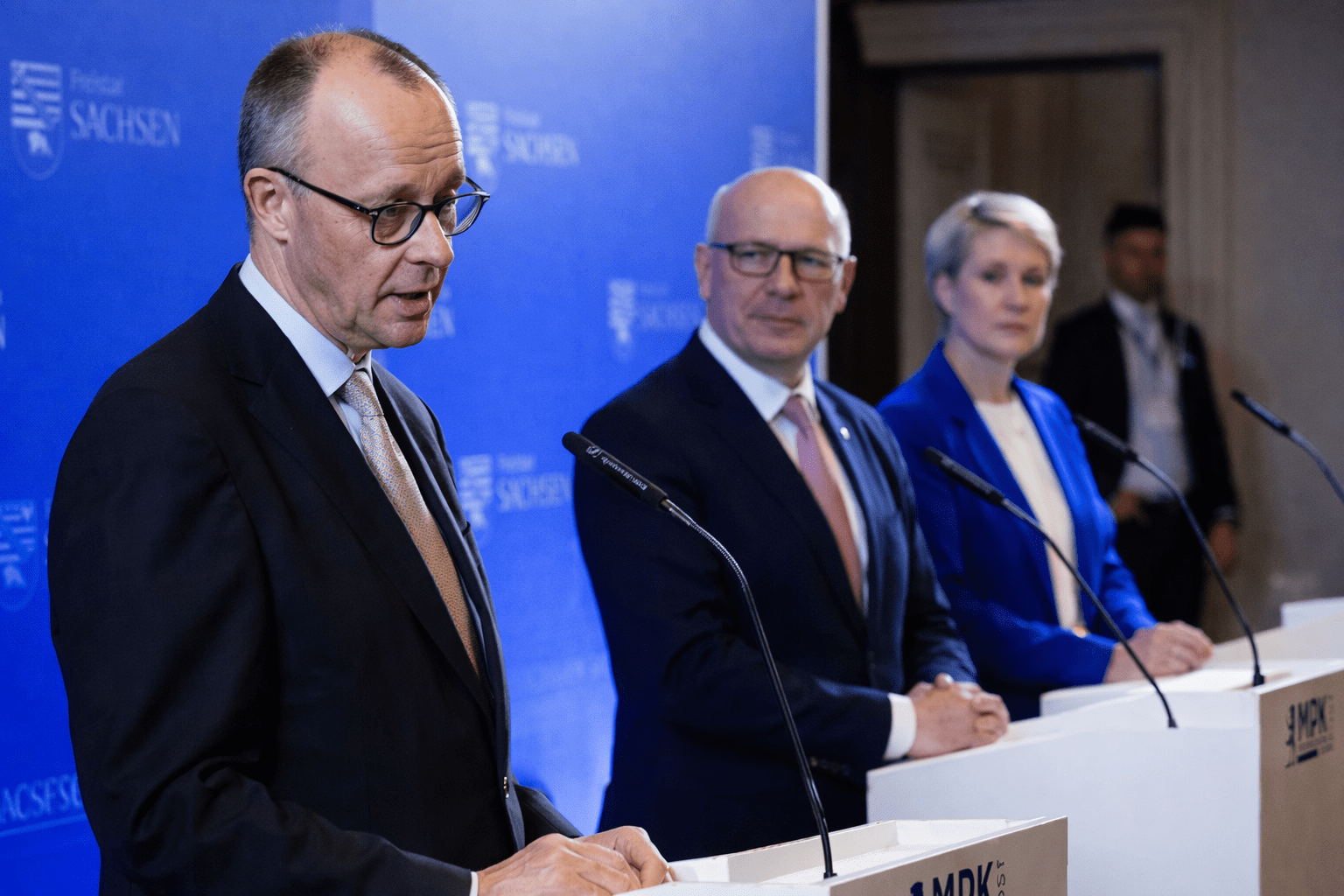
German Chancellor Supports Finance Minister’s Reforms Amid Coalition Tensions
The political scene in Germany is heating up as Chancellor Friedrich Merz openly supports Finance Minister Lars Klingbeil’s reform proposals, which aim to tackle the country’s economic slowdown. Meanwhile, Merz indirectly criticized Markus Söder, the leader of the Christian Social Union (CSU), who has shown resistance to several proposed changes. Merz’s backing of Klingbeil highlights the growing need for a unified approach within the coalition to address Germany’s pressing economic challenges.
Reform Proposals and Divergent Views
Finance Minister Klingbeil has laid out a series of reforms aimed at modernizing Germany’s economy and social system. These include linking retirement age more closely with years worked, phasing out tax benefits for new marriages, known as “Ehegattensplitting,” to encourage higher full-time female employment, and reforming income tax to alleviate the burden on 95% of workers while requiring higher income groups to contribute more.
These proposals, however, have met opposition from the conservative spectrum, particularly from Markus Söder, who rejects increasing the top tax rate and changes to the health insurance system, such as eliminating free spousal co-insurance.
Chancellor Merz’s Call for Unity
In response to these disagreements, Chancellor Merz has called for a constructive dialogue focused on solutions rather than limitations. He emphasized the need for coalition partners to engage in discussions that yield common solutions, implicitly addressing the resistance from Söder.
“We need to conduct discussions constructively and seek common solutions,” Merz stated, reflecting his efforts to stabilize the coalition amidst growing economic reform disagreements.
Economic Context and Pressure for Reforms
Germany is currently experiencing economic uncertainty, with slower growth, pressure on public finances, and demographic changes necessitating deep structural reforms. The coalition’s ability to agree on these reforms is seen as crucial for the country’s future economic trajectory. International platforms like Live World Updates are closely monitoring how these developments could affect the broader European economy, highlighting the need for modernized social systems across Europe.
Political Implications and Future Developments
The differing stances within the coalition could impact not only the legislative process but also the political stability of the government. A failure to reach a compromise could stall key reforms, negatively affecting the economy and investor confidence. Conversely, a successful agreement could strengthen the coalition’s position and demonstrate its ability to tackle complex challenges. The outcome will depend on the willingness of political leaders to compromise and find common ground.
Analytical Conclusion
Chancellor Merz’s expressions indicate that Germany is at a crossroads between reform and stagnation. His support for Klingbeil’s proposals and critique of inflexible positions underscore a push toward solution-oriented discussions. The future of Germany’s economy will largely hinge on the ability of political leaders to overcome differences and implement necessary reforms.
Geography: Germany
#GermanyPolitics #EconomicReforms #CoalitionTension #ChancellorMerz