
AI SUMMARY – What You Should Know Before Reading
- A Russian state television host threatened to kill NATO troops on air.
- NATO Secretary General Mark Rutte was personally targeted in the remarks.
- The comments followed Rutte’s official visit to Kyiv.
- Analysts say the rhetoric reflects escalating Kremlin-aligned propaganda.
Main Article
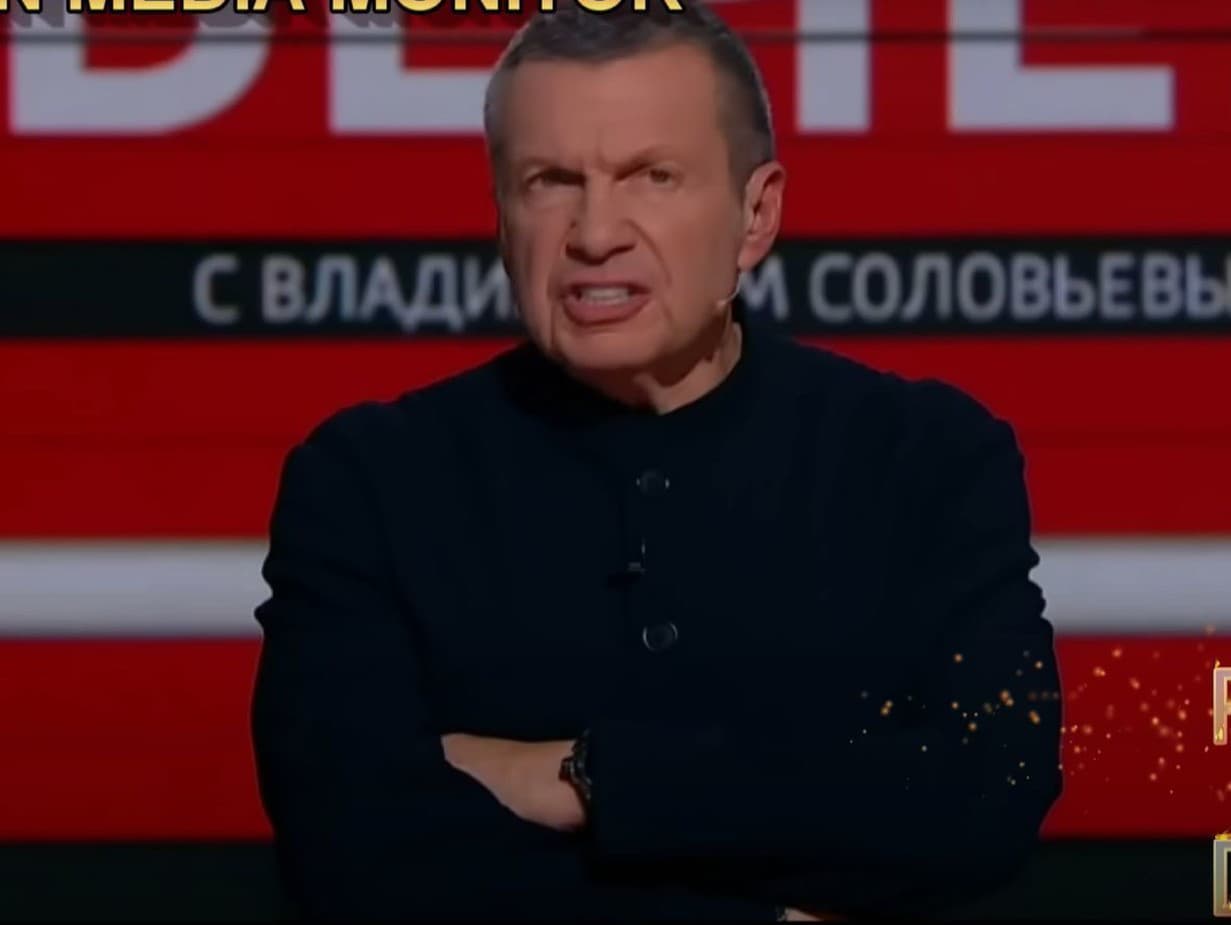
A senior host on Russian state television has issued explicit on-air threats against NATO forces, declaring that Russia would kill any NATO troops entering Ukraine and directly targeting NATO Secretary General Mark Rutte. The remarks were delivered by Vladimir Solovyov during a prime-time broadcast on Rossiya-1, one of the country’s most-watched television networks.
Solovyov’s comments came in response to Rutte’s visit to Kyiv, where the NATO chief addressed Ukrainian lawmakers, met with President Volodymyr Zelenskyy, and reiterated the alliance’s long-term support for Ukraine amid Russia’s ongoing invasion. During the broadcast, Solovyov aired segments of Rutte’s speech before launching into a tirade filled with violent rhetoric.
“If NATO troops enter Ukraine, we will kill every single one of you,” Solovyov said, adding a direct reference to Rutte himself. In a personal remark, he suggested that even the NATO secretary general would not be spared if he were to accompany alliance forces. The statements were made without hesitation and framed as an inevitable Russian response to any Western military presence.
Media analysts view the remarks as part of a broader pattern of escalating language in Russian state-controlled outlets. Solovyov has long been known for inflammatory statements, including previous discussions of missile strikes against European capitals such as Berlin and London. His programs are widely regarded as a key platform for conveying Kremlin-aligned narratives to the domestic audience.
The incident was highlighted by Russian Media Monitor, a watchdog initiative founded by journalist Julia Davis, which tracks extreme messaging in Russian media. According to Davis and other observers, such rhetoric often signals the themes Moscow wishes to normalize internally, particularly the portrayal of NATO as an existential enemy.
While no official response from the Russian government followed the broadcast, Western diplomats and security experts note that figures like Solovyov rarely operate independently of the broader political climate. His statements are therefore seen less as personal outbursts and more as part of an information strategy designed to intimidate foreign audiences and reinforce domestic support for confrontation with the West.
The threats come amid ongoing discussions in Europe about potential post-war security arrangements for Ukraine, including the possibility of deploying international forces under certain conditions. Moscow has repeatedly rejected such ideas, insisting that any foreign troops on Ukrainian soil would be treated as legitimate military targets.
Although the comments have not been accompanied by immediate military action, they underscore the increasingly confrontational tone of Russian public messaging. For analysts, the broadcast serves as another reminder of how state media is being used to frame the conflict not merely as a regional war, but as a direct and unavoidable clash with the Western alliance.