
Key Points
- US President Donald Trump announced the creation of a new regional coalition aimed at combating drug cartels across the Western Hemisphere.
- Seventeen countries have reportedly expressed support for the initiative following a summit in Florida.
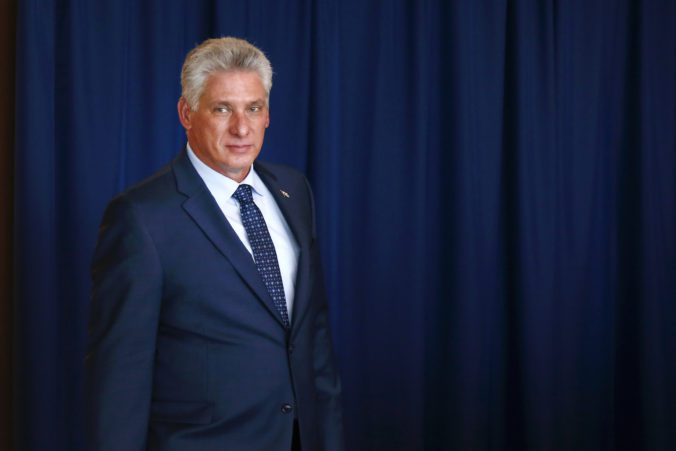
- Cuban President Miguel Díaz-Canel condemned the meeting as “neocolonial” and criticized Washington’s influence in the region.
- Trump also stated that Cuba is facing severe economic and political pressure and suggested that talks between Havana and Washington may be possible.
Regional security summit highlights shifting dynamics in the Americas
A political summit held in Florida has triggered renewed geopolitical tensions in the Western Hemisphere after the United States announced the formation of a new regional security coalition aimed at combating drug cartels and organized crime.
During the gathering, US President Donald Trump outlined plans for a multinational security initiative designed to strengthen cooperation among governments in Latin America and the Caribbean. According to the US administration, the goal of the coalition is to coordinate intelligence sharing, security strategies and joint actions against criminal organizations involved in drug trafficking.
The announcement immediately sparked a strong response from Cuba. Cuban President Miguel Díaz-Canel criticized the summit, describing it as a “neocolonial” initiative that encourages governments in the region to rely on US military power to address domestic challenges.
The exchange of statements highlights the enduring political divide between Washington and Havana, as well as broader ideological differences across Latin America.
Coalition aimed at dismantling organized crime networks
According to US officials, the proposed coalition would focus on dismantling transnational criminal networks responsible for drug trafficking, violence and corruption throughout the Americas.
Seventeen countries have reportedly expressed support for the initiative. Leaders or representatives from Argentina, Bolivia, Chile, Costa Rica, the Dominican Republic, Ecuador, El Salvador, Guyana, Honduras, Panama, Paraguay and Trinidad and Tobago were among those participating in the meeting.
Drug trafficking remains one of the most persistent security challenges in the region. Powerful cartels operating across national borders continue to influence political systems, undermine institutions and fuel violence in several countries. Analysts say coordinated international strategies may be necessary to effectively confront these networks.
However, security cooperation involving the United States has historically been controversial in parts of Latin America. Some governments remain cautious about initiatives that could increase Washington’s military or strategic influence in regional affairs.
Cuba responds with strong criticism
Cuban President Miguel Díaz-Canel sharply criticized the Florida summit in a public statement, accusing the United States of promoting a political agenda that resembles past forms of external influence in Latin America.
According to the Cuban leadership, the initiative risks encouraging military solutions to domestic security issues in participating countries. Havana has long opposed US-led regional security frameworks, arguing that they can undermine national sovereignty.
The strong reaction from Cuba reflects broader tensions between the island nation and Washington, which have persisted for decades despite occasional diplomatic openings.
Trump signals possible negotiations with Havana
During the summit, President Trump also commented directly on Cuba’s economic and political situation. He argued that the island is facing severe structural challenges, including financial shortages and energy constraints.
Trump suggested that Cuban officials may be interested in negotiating with the United States and indicated that discussions could potentially involve both him and US Secretary of State Marco Rubio. No official confirmation of such negotiations has been provided by the Cuban government.
While relations between the two countries have often been defined by confrontation, observers note that periods of diplomatic dialogue have occurred in the past. Whether new talks could emerge remains uncertain.
Global political and economic developments in the Americas are closely monitored by analysts and international media. Broader coverage of geopolitical trends and international affairs can also be found on https://www.liveworldupdates.com/.
Analysis: Security cooperation meets geopolitical rivalry
The Florida summit highlights two overlapping trends shaping the political landscape of the Americas. On one hand, regional governments are increasingly seeking coordinated responses to organized crime and drug trafficking. On the other, ideological divisions between countries continue to influence diplomatic relations.
For Washington, the proposed coalition represents an attempt to strengthen partnerships with governments that share similar security priorities. For critics, including Cuba, the initiative raises concerns about geopolitical influence and regional autonomy.
The success of the new coalition will ultimately depend on the willingness of participating countries to cooperate closely and maintain long-term strategic coordination. At the same time, the evolving relationship between the United States and Cuba will remain a key factor in the broader political balance across the Caribbean and Latin America.