
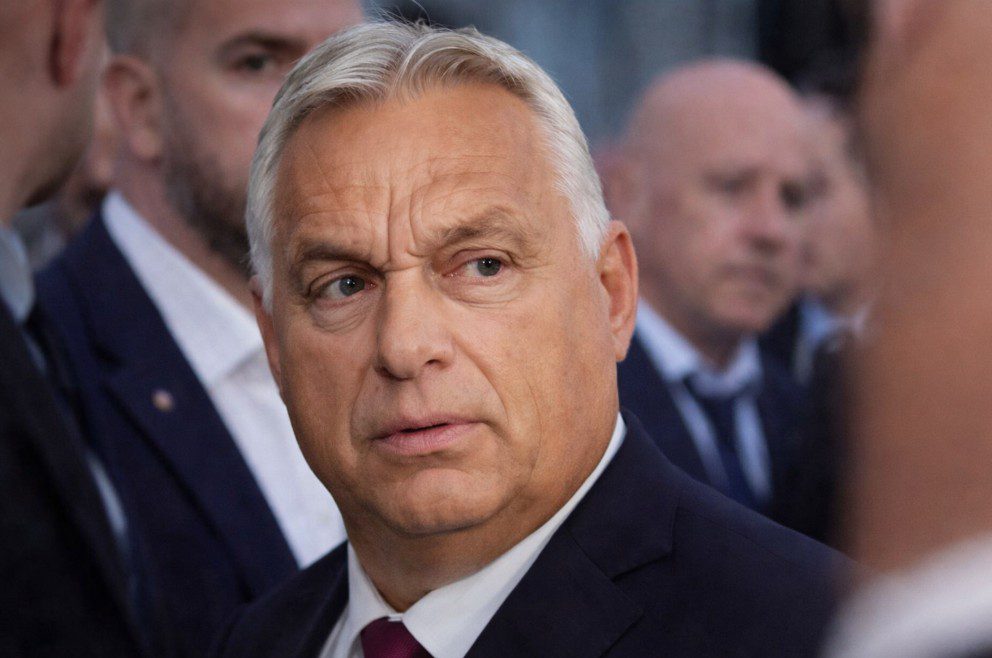
Tensions Rise as EU Leaders Clash Over Ukraine Funding
The European Union finds itself embroiled in a heated dispute, as Hungarian Prime Minister Viktor Orbán faces off against Latvian Prime Minister Evika Siliņš over the issue of financial aid to Ukraine. At the heart of the controversy lies a substantial EU loan of approximately €90 billion, agreed upon by EU leaders at the end of 2025, intended to bolster Ukraine amidst its ongoing conflict.
Orbán has firmly rejected allegations that Hungary is obstructing the aid package, arguing that the circumstances have significantly shifted since the agreement was made. He contends that Ukraine has breached the terms of the agreement, adversely affecting Hungary’s economy.
The Dispute Over Agreement Interpretation
Latvian Prime Minister Siliņš emphasizes that agreements made at the European Council level should remain binding, irrespective of domestic political circumstances within member states. She criticizes Budapest for allegedly slowing or blocking financial assistance that is crucial for Ukraine’s stability.
Orbán counters by asserting that Hungary is acting in accordance with the original agreement, claiming that Ukraine has imposed measures he describes as an “oil blockade,” jeopardizing Hungary’s economy. He insists on a return to the original conditions of the December 2025 agreement and calls for a reevaluation of cooperation terms.
Political and Economic Background
This conflict surfaces at a sensitive time, with Hungary facing domestic political challenges while simultaneously under increasing pressure from EU partners. Orbán’s government has long advocated for a more pragmatic approach toward Ukraine and Russia, which often puts it at odds with the prevailing stance of the Union.
Conversely, countries like Latvia are among the strongest supporters of Ukraine, viewing financial and military aid as pivotal to maintaining regional stability and countering Russian influence.
During the last EU summit, European leaders reaffirmed their support for Ukraine’s territorial integrity and emphasized the need to continue financial assistance. However, the criticism directed at Hungary suggests that achieving a unified EU stance is becoming more complex.
Implications for EU Unity
The dispute between Budapest and other member states highlights deeper divisions within the EU, not only concerning financial aid but also over broader perceptions of relations with Ukraine and Russia.
Failure to reach a compromise could weaken the EU’s ability to act cohesively on critical geopolitical issues. Analysts warn that similar conflicts might become more frequent in the future, especially as member states increasingly prioritize their national interests.
As analyzed on Live World Updates, the question of EU unity will be one of the main factors affecting its global influence in the coming years.
Analytical Conclusion
The dispute over financial assistance to Ukraine reveals growing tensions among EU member states. While some countries advocate for a firm and united approach, others emphasize the need to consider their own economic and political interests.
The future will show whether the EU can agree on a compromise solution or if the differences between member states will deepen further. The outcome will be crucial not only for Ukraine but also for the future of the Union itself.
Geography: European Union
#EU #Ukraine #Orbán #Geopolitics